Four Majors Answer Six Essential Questions
By Leslie Meredith
Heavy-lift carriers are the lifeblood of project cargo transportation, and it’s no wonder the fleet update is one of the most popular sessions at every Breakbulk event. Houston is no exception, and as we prepare for the panel “Fleet Decisions in an Era of Strategic Demand” at Breakbulk Americas, we interviewed four of the region’s foremost carriers — AAL Shipping, BBC Chartering, Chipolbrok and SAL Intermarine — about the issues on their minds today. Get up to speed on the carrier market, and understand their challenges and business strategies to help inform your own chartering plans.
From Issue 3, 2026 of Breakbulk Magazine.
1. How would you assess demand in the Americas today compared with a year ago?
SAL Intermarine: Compared to 2025, the demand for imports into North America this year has been stronger. We are primarily seeing growth in the power and industrial segments. Projects that were delayed or held back by financing, tariffs, permitting and uncertainty are beginning to move forward, while a new wave of investments are emerging around power generation, data centers, LNG, grid infrastructure and industrial reshoring.
Traditional energy remains important, but the project market is becoming more diversified. The explosion in data center construction is creating requirements for more power plants, transformers, substations, generation equipment and other heavy components. I would describe the Americas market as healthy and improving, but with considerable volatility around project timing and final investment decisions.
AAL: Demand for multipurpose (MPP) and project heavy-lift shipping across the Americas has strengthened over the past 12 months, particularly in the energy and infrastructure sectors. A major driver has been the rapid expansion of data centers across North and South America, which is creating unprecedented demand for power generation equipment, transformers, gas turbines and associated infrastructure.
At the same time, significant investment is being made in upgrading and expanding national power grids to address growing electricity demand and improve network resilience. We are also seeing continued activity in LNG, petrochemicals, mining and industrial manufacturing projects, all of which require specialized project cargo transportation. Overall, project cargo demand in the Americas remains robust and is trending upward compared with the same period last year.
BBC: Demand across the Americas remains resilient. While activity levels vary by sector and geography, the overall project pipeline is healthy, and vessel utilization remains firm. We see encouraging momentum in key project markets and believe the underlying fundamentals for the heavy-lift and multipurpose sector are similar today as they were a year ago.
Chipolbrok: Demand is much stronger than a year ago. Last year, tariff uncertainty made customers cautious and delayed many decisions. This year the market is more stable, and we are seeing a strong rebound in demand across the Americas.
2. Which sectors do you expect will drive project cargo volumes across the Americas over the next five years?
-in-lvsi,-china-(1).jpg) SAL Intermarine: Power generation and grid infrastructure: Data centers and AI are driving enormous incremental electricity demand, which translates into cargo opportunities well beyond the data centers themselves. The associated cargoes include gas turbines, generators, transformers, substations, switchgear, transmission equipment and other oversized components. Additionally, battery systems coming from the Asian market to the U.S. are being integrated into the power grid.
SAL Intermarine: Power generation and grid infrastructure: Data centers and AI are driving enormous incremental electricity demand, which translates into cargo opportunities well beyond the data centers themselves. The associated cargoes include gas turbines, generators, transformers, substations, switchgear, transmission equipment and other oversized components. Additionally, battery systems coming from the Asian market to the U.S. are being integrated into the power grid.
LNG and traditional energy: The U.S. Gulf Coast remains a major project market, with projects now entering operations and additional LNG capacity under construction or development at locations along the Louisiana and Texas coastline.
Nuclear: New nuclear power plants and eventually small modular reactors (SMRs) could become a meaningful project/heavy-lift cargo segment. It is still too early in the project cycle, but we expect it to be a major volume driver over a five-year horizon.
AAL: The strongest growth is expected to come from the power generation, energy and LNG sectors. Across the Americas, governments and private investors are committing substantial capital to energy security, grid expansion and industrial development. Based on current project pipelines, we expect import volumes of large-scale project cargoes associated with these sectors to reach record levels between 2027 and 2029.
Demand linked to data center development will also remain a significant growth driver, as the energy infrastructure required to support these facilities continues to expand. Renewable energy will continue to play an important role, particularly solar projects, which are seeing increasing deployment throughout the region. The outlook for onshore and offshore wind remains positive, although future growth rates will depend largely on political priorities, regulatory frameworks and permitting processes.
Taken together, conventional power, LNG, grid infrastructure and renewables are expected to generate substantial project cargo volumes over the next five years.
BBC: We expect project cargo growth to be driven primarily by energy, mining, infrastructure and industrial manufacturing. Investments in power generation and transmission, and renewables will continue to generate demand for the transportation of large, heavy and complex cargoes.
Chipolbrok: Oil and gas, LNG, and energy storage systems will remain the main drivers. We also see growing potential in the energy transition and power infrastructure. Given the scale of planned energy projects, demand for vessels able to carry large, heavy and complex cargo should stay strong.
3. What’s the single biggest challenge facing carriers in the Americas today?
SAL Intermarine: Uncertainty. The challenge is knowing when projects will realistically reach FID, when cargo will be ready, and when it will physically move. For an MPP heavy-lift carrier, this creates a difficult planning environment. You need to make decisions about fleet positioning, vessel availability, equipment, cranes, port calls and manpower well in advance. However the project schedule can change at any moment due to permitting, financing, tariffs, geopolitics or engineering changes.
Customers are looking for heavy-lift carriers to be more of a logistics partner than a vendor. You must be capable of adapting when a project shifts by a few weeks, changes port or suddenly requires a different lifting configuration. With the JSI Alliance fleet, we are able to provide a wide range of vessel types to meet the projects’ needs on a worldwide basis and intra-Americas. With our SAL Intermarine service trading North and South America on a weekly basis we can quickly adapt to the customers’ needs.
The other challenge for the future is vessel capacity. The overall MPP heavy-lift fleet is aging beyond 20 years. Specialized heavy-lift tonnage and experienced crews are not added overnight. Industry participants are already pointing to limited vessel capacity, specialized equipment and skilled labor as structural constraints in the future.
AAL: There is no single challenge affecting carriers today; rather, the industry is managing a combination of geopolitical, operational and supply-chain risks.
One of the most significant challenges remains the ongoing security situation in the Red Sea, where attacks on commercial shipping have forced many operators to reroute vessels around the Cape of Good Hope. This has increased transit times, reduced fleet availability and placed additional pressure on global shipping schedules. In addition, tensions in the Middle East continue to create uncertainty around the Strait of Hormuz, a critical chokepoint for global energy exports.
Closer to the Americas, congestion and operational constraints at the Panama Canal remain a concern. Although water levels have improved compared with recent years, vessel scheduling, slot availability and transit costs continue to impact global shipping networks. For carriers, the challenge is maintaining schedule reliability and service quality while navigating an increasingly complex geopolitical environment.
BBC: The biggest challenge is managing uncertainty in an increasingly complex environment. Projects are becoming larger and more sophisticated, while geopolitical developments, regulatory requirements and supply chain disruptions continue to impact planning. Our focus is on maintaining flexibility, investing in modern tonnage and staying close to our customers to support their evolving requirements.
Chipolbrok: Limited slot availability through the Panama Canal is a real challenge, affecting routing and scheduling. There is also ongoing uncertainty about trade policy and possible tariff changes which are currently frozen until mid-November.
4. How realistic is the prospect of a significant expansion in U.S. commercial shipbuilding beyond defense and service vessels? What conditions would need to exist for carriers to place more orders with U.S. shipyards? Will heavy-lift ships be built in the U.S.?
.jpg) SAL Intermarine: As things stand now and in the near term, I do not believe that U.S. shipyards would be able to make a significant impact in commercial shipbuilding. The issue is tied to the cost for construction, financing and lack of suitable shipyards in the U.S. that can build a heavy-lift vessel. Set against the competitive global commercial ship building market, I do not see how U.S. shipyards can secure the financing and workforce needed to become a legitimate player.
SAL Intermarine: As things stand now and in the near term, I do not believe that U.S. shipyards would be able to make a significant impact in commercial shipbuilding. The issue is tied to the cost for construction, financing and lack of suitable shipyards in the U.S. that can build a heavy-lift vessel. Set against the competitive global commercial ship building market, I do not see how U.S. shipyards can secure the financing and workforce needed to become a legitimate player.
AAL: A significant expansion of U.S. commercial shipbuilding beyond defense and domestic service vessels would be challenging under current market conditions.
The U.S. has a limited number of active large-scale commercial shipyards, with many focused primarily on military programs, government contracts and Jones Act-compliant vessels. As a result, available capacity for internationally trading commercial vessels remains limited. Cost competitiveness is also a major factor. Construction costs in U.S. shipyards can be substantially higher than those in leading shipbuilding nations such as China, South Korea and Japan, while delivery schedules are typically longer.
For international carriers to place large numbers of orders in U.S. shipyards, there would need to be significant improvements in cost competitiveness, production capacity, workforce availability and delivery timelines. While niche opportunities may emerge, it remains unlikely that heavy-lift and multipurpose vessel construction will shift meaningfully to the U.S. in the foreseeable future.
BBC: Frankly, we do not see a significant shift towards U.S.-built heavy-lift vessels in the foreseeable future. China has established itself as the most competitive builder of this type of tonnage, supported by scale, supply chains and decades of experience. Equally important, developing the skilled workforce and shipbuilding expertise required for complex multipurpose vessels is a long-term process. The U.S. has strong industrial capabilities, but building a globally competitive commercial shipbuilding sector for these vessel types would take many years, if not decades.
Chipolbrok: U.S. shipyards currently lack the capacity and expertise for major commercial expansion, especially for specialized vessels, though some initiatives aim to change this. For carriers to place significant orders, yards would need enough capacity, competitive costs, reliable delivery times and the ability to build specialized ships.
Heavy-lift vessels are particularly demanding due to their size and equipment. Building them in the U.S. is possible long term, but would require major investment in infrastructure, workforce and industrial capacity.
5. If you could change one regulation affecting carriers, what would it be?
SAL Intermarine: It is hard to say that changing one regulation would make a significant impact. If we are looking at The Jones Act, then we would need to simplify ways that a shipper can still execute on their shipments when a U.S.-flagged vessel is not in position to perform the move. If we are looking at overall commercial vessel regulations, then the focus would be to gain clarity with regards to various worldwide tariffs that have been implemented over the past 1.5 years.
AAL: The regulatory environment affecting international shipping is complex, making it difficult to identify a single measure that would have the greatest impact. However, one area that continues to attract industry attention is the proposed U.S. Trade Representative (USTR) measures relating to Chinese-built vessels and shipping services.
Although implementation has been delayed and aspects of the proposal remain under review, any significant enforcement could have immediate consequences for global shipping costs, vessel deployment strategies and supply chains. The long-term effects would depend on how the regulations are ultimately applied and how the market adapts, but in the short term they could create substantial disruption across multiple shipping sectors.
BBC: Rather than a repeated suspension, we would advocate for the cancellation of the USTR actions against vessels built in China, which had been suspended for a one-year window until November. Businesses need certainty to invest and grow, and ongoing regulatory uncertainty erodes confidence, delays investments, and complicates long-term planning.
Chipolbrok: Greater stability and predictability in tariffs and trade rules. Frequent changes make planning difficult. Carriers and customers need a stable framework to plan investments and logistics years ahead.
6. Can you share any investments you’re making in your fleet capabilities, cargo handling, etc. to better serve customers in the Americas?
.jpg) SAL Intermarine: For more than 35 years, SAL Intermarine has run its Americas Liner Service. When volumes increase on the Americas Liner Service, we have the flexibility to add more vessels and frequency to the sailing schedule to meet market demands.
SAL Intermarine: For more than 35 years, SAL Intermarine has run its Americas Liner Service. When volumes increase on the Americas Liner Service, we have the flexibility to add more vessels and frequency to the sailing schedule to meet market demands.
As recently as May of this year, SAL, a member of the JSI Alliance, launched the Atlantic Service in memory of Svend Andersen, which provides monthly liner service connecting Europe, the U.S. Gulf, East Coast South America, East Africa and the Mediterranean region. Combining scheduled sailings with heavy-lift and project cargo capabilities, the service offers flexible solutions for complex international shipments utilizing five modern, highly efficient shallow-draft MPP vessels with crane capacities of up to 500 tons.
The Atlantic Service was launched as we saw an increase in cargo volumes originating from Europe to North and South American market which complements our existing Americas Liner Services. Once the vessel is open in South America’s east coast, we can then provide monthly service from ECSA ports to European ports in both the Mediterranean and North Europe. So far there has been a very positive reaction from our customer base for the Atlantic Service.
In addition to the Americas and Atlantic service we are also invested in our newbuilding program with our Orca class vessels that have a 1,600-tonne combined lifting capacity. These next generation vessels were designed in-house and set a new standard with regards to speed, consumption, cargo loading capabilities and emissions. Additionally, we are excited to mention that Jumbo has ordered two newbuildings.
JSI Alliance has added a significant number of multipurpose vessels to our fleet within the past two years (we are now close to 100 vessels in total), thus opening opportunities for a broader range of cargo services worldwide. We can now offer a global platform for all types of cargoes, from light to heavy, from floating to static and even cargo that require semi-submersible vessels.
AAL: AAL has recently completed one of the most significant fleet expansion programs in the multipurpose and heavy-lift sector with the delivery of ten 32,000-dwt Super B-Class vessels.
These vessels feature over 41,500 cubic meters of cargo intake, more than 5,000 square meters of clear weather deck space, our AAL Eco-Deck retractable deck extension technology and heavy-lift capabilities of up to 800 tonnes. The class was specifically designed to meet growing demand for larger and more complex project cargo shipments. The strong performance of the Super B-Class fleet to date, combined with sustained customer demand across global project cargo markets, has led AAL to order an additional two Super B-Class vessels for delivery in 2028, completing the 10-vessel fleet.
These investments reinforce AAL’s commitment to providing greater capacity, enhanced cargo-handling capabilities and reliable service solutions for customers across the Americas and worldwide.
BBC: Our fleet investment decisions are made from a global perspective, as our vessels operate worldwide, with the Americas representing a key market for BBC Chartering. We are currently completing delivery of the first series of fifteen LakerMax vessels, which began entering service in 2024. In addition, six further LakerMax vessels are scheduled for delivery in 2028 and 2029, with options for an additional six vessels. These investments reflect our commitment to providing customers with modern, efficient and highly capable tonnage for complex project cargo transportation.
Chipolbrok: We keep investing in new tonnage built with the American market in mind. A key focus is triple decker vessels with heavy-lift cranes and front bridge giving us the flexibility and capacity for complex project cargo, especially in energy. With a strong pipeline of energy projects in the Americas, our fleet investments aim to give Chipolbrok the right mix of capacity, heavy-lift capability and flexibility to support these projects.
At Breakbulk Americas 2026: Fleet Decisions in an Era of Strategic Demand. Breakbulk Live Stage, Wednesday, Sept. 23, 10:45am-11:30am.
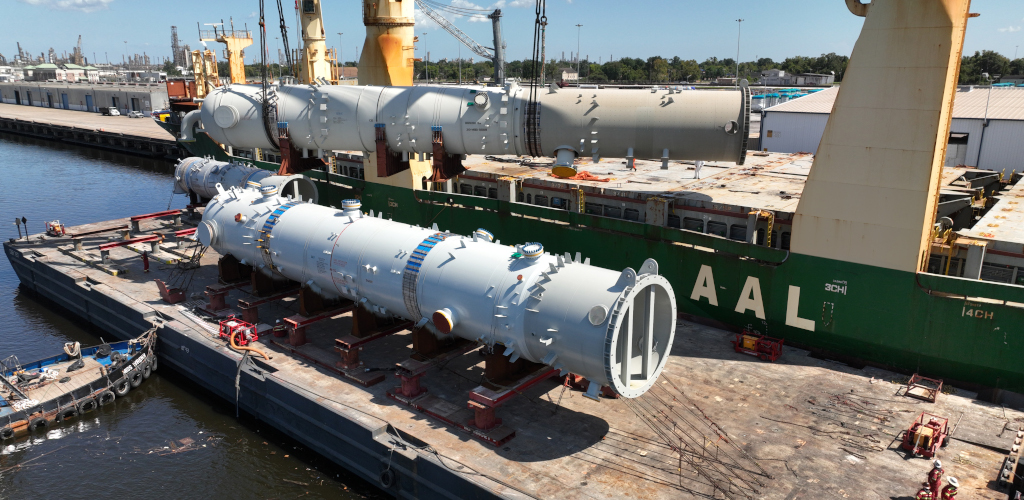
Top photo: A 606-tonne absorber and a 436-tonne separator are discharged from the AAL Brisbane at the Port of Beaumont, Texas. Credit: AAL Shipping
Second: The MV Patricia (Orca Class) in Lvsi, China. Credit: SAL Intermarine
Third: The LakerMax vessel BBC BASEL is one of the latest additions to the fleet of BBC Chartering. Credit: BBC Chartering
Fourth: Chipolbrok’s 61,700dwt multipurpose vessel, Herbert. Credit: Chipolbrok





.png?ext=.png)








.png?ext=.png)









_1.jpg?ext=.jpg)