A Maritime Career Shaped by Resilience, Reinvention and Relentless Curiosity
_1.jpg)
By Liesl Krog
What do nuns, shipyards and a passion for travel have in common? They all helped shape Christel Pullens’ remarkable career. Discover the story behind her success.
From Issue 2, 2026 of Breakbulk Magazine.
(5-minute read)
If Christel Pullens had to explain why she has spent most of her career in shipyards, she might tell you it all started with the nuns.
Across the road from her childhood home in Elshout, in southern Netherlands, stood a monastery where retired missionary nuns returned after years spent working in far-flung parts of the world. As a young girl she was fascinated by their stories and the images they shared from countries far beyond the small town where she and her four siblings were being raised.
“There was this whole world beyond my town where people lived differently, looked different and experienced life differently and all I wanted to do was go there,” she recalls.
Not far away, another influence was taking shape. In a neighboring village, giant ship propellers cast at a local foundry caught her attention. Convinced it could offer her a route into the world the nuns described, she applied for an internship with the company behind the propellers.
She imagined herself somewhere in Brazil or elsewhere in the Americas, but the internship took her to a shipyard in Belgium instead. “I was a teenager with these big dreams of faraway places and was slightly disappointed that I was only going to go to Belgium, but I remember walking into that yard and something just clicked. I felt, this is where I belong.”
Bigger Projects, Bigger Risks
Her time for travel came soon enough. While continuing her studies, she spent a year in Johannesburg researching her thesis before returning to the Belgian shipyard where her career had started. What followed was eight years at the yard during a period when Europe’s shipbuilding sector was beginning to contract. She still remembers the moment the reality of the industry’s decline truly hit home.
“Someone asked if they could borrow the winches from the slipway for a museum exhibition about shipbuilding in Belgium disappearing,” she recalls. “And I said: ‘But the yard is still using them.’”
By then, however, work was slowing and Pullens knew it was time to move on. She still had ambitions of working internationally and after the propeller manufacturer became part of Wärtsilä she began pursuing opportunities within the wider group.
Initially, she struggled to even get past human resources.
“They told me my background was not relevant for the role. My response was that I was already working for one of their companies. What do you mean it’s not relevant?”
Eventually, one senior manager looked beyond her age and the fact that she was a young woman applying for a technically demanding role in Venezuela. “He became one of the people who really changed my career,” she says. “We still keep in touch today.”
The experience would shape her own thinking about leadership and mentorship. “You need someone in your corner,” she says. “Someone who sees your value and is willing to back you, even if you are different from what everybody expects.”
To this day, Pullens says it is the most important advice she can offer younger professionals entering the industry. “Find your sponsor,” she says. “Find someone who sees your value and is willing to back you. Just as important: don’t wait for the museum to call before exploring like I did initially. Go out there and find the opportunities.”
Looking back, Pullens admits there were times she stayed too long in organizations where opportunities for growth never fully materialized despite consistently delivering results.
“I would meet my targets, exceed them even and still not get the promotion or the interesting project,” she says. “Eventually you have to recognize when a company values you and when it doesn’t. Never be afraid to move to tackle a new challenge.”
That mindset would ultimately shape Pullens’ career, leading her toward increasingly complex international projects and some of the most demanding cargo operations in the maritime sector.
After joining Dockwise, now part of Boskalis, she became immersed in the world of heavy transport and engineered logistics on a global scale. “I remember seeing these massive projects on television immediately knowing I want to be part of that,” she says.
Earning Her Place
 Three decades later, few women have built careers across as many corners of the maritime and heavy logistics sectors as Pullens has. She has closed contracts and executed projects involving almost every type of inland and oceangoing vessel across more than 60 countries, while leading sales teams, serving on boards and building an international maritime career.
Her work has ranged from major shipyard projects to highly sensitive military transport operations, including the movement of submarines and other classified cargo, with contracts valued at up to €200 million.
Along the way, she held senior roles at Damen Shiprepair & Conversion, Alewijnse and MeteoGroup (now ABB) and served on the Rotterdam Maritime Board, the World Maritime Academy and the Breakbulk Europe Advisory Board. She was also president of WISTA The Netherlands.
It raises the obvious question: how does somebody build a career across so many organizations, sectors and cultures while continuing to break into spaces where women are still often the exception rather than the norm?
She laughs before responding. “Honestly? It is not all that exciting an answer. As a woman in this industry, you learn very quickly that you always have to be extra prepared.”
Whether she was walking into meetings with shipowners in Venezuela, working on classified military transport operations or negotiating multi-million-dollar projects, Pullens knew she had to be more prepared than anyone else in the room, down to the smallest technical detail.
“With propulsion systems especially, every vessel is different,” she explains. “It’s not like engines where you can know one system and apply it everywhere. I would spend hours preparing before every trip, studying drawings, going into the workshop, understanding every technical detail.”
Even outside maritime, she still encounters it in another passion: sidecar motocross racing, which she returned to competitively three years ago before turning 50.
“It’s also a male-dominated world,” she says. “Initially people don’t really know what to make of you. But once they see you race, opinions change.”
The parallels with shipping are difficult to ignore. “There are still days when you walk into old boys’ network meetings and you wonder if you really have the energy to do it all over again,” she admits. “But then there are other days where you feel completely on top of the world.”
Ultimately, she believes resilience comes down to preparation, consistency and refusing to shrink yourself. “You show up prepared, you stand your ground and you keep going.”
Choosing Impact Over Comfort
Yet, after decades of doing exactly that, Pullens increasingly found herself questioning the long-term sustainability of the sector she loved. “I reached a point knowing we cannot continue like this,” she says. “We are using and abusing the planet, and there has to be a smarter way of doing things.”
While still working in an executive board role, Pullens enrolled in an online sustainability management program through Cambridge University, immersing herself in new thinking around long-term business sustainability. “It changed the way I looked at business,” she says. “Not how to maximize profit in the short term, but how to build something that is sustainable for people, planet and profit over the long term.”
By 2020, she had made a decision that surprised many around her. “I decided that from that point onward I only wanted to do work that created a positive impact,” she says. The choice came at a cost. She walked away from the security of a senior corporate career, including the salary and associated perks.
That decision eventually led her to Sea Ranger Service, a social enterprise focused on maritime conservation and training young people for work at sea. That same philosophy of making a difference continues to shape her work through maritime innovation and technology development at PortXL where Pullens helped to connect emerging technologies with maritime and logistics players looking to modernize operations and improve sustainability.
“I can help bridge the gap between innovative companies and major industry players because I understand both worlds,” she says.
Beyond PortXL, she is looking forward to applying her skills and passion to operationalize new technologies in innovation projects that push the envelope.
“The pace of innovation is changing dramatically,” she says. “You can see it in everything from energy systems to defense technology and maritime operations. Industries can no longer afford to take years to adapt. We have to make a change now.”
Beyond the Boardroom
 Looking ahead, Pullens believes the maritime industry’s greatest challenge is no longer generating new ideas, but creating organizations capable of implementing them.
“Five years ago, innovation was still a nice-to-have topic. Today it is essential,” she says.
Yet she warns that too many companies still treat innovation as a side project rather than embedding it into daily operations. She believes truly radical thinking in maritime today is surprisingly simple: be willing to question longstanding assumptions and remain open to doing things differently.
“Innovation is not about big visionary talk,” she says. “It’s about creating structures that allow ideas to survive operational reality. You need processes to support that but most importantly, a culture that is open to change.”
Six years after making the decision to walk away from the corporate world, Pullens says she has no regrets. “I have a completely different life now, but it feels so much better. I work with people who genuinely want to change the industry in a positive way.”
And away from the boardrooms and shipyards? Pullens says she is simply “mom”. Her two boys, aged 11 and 13, are her pride and joy. Together, the trio share a love of music, playing drums, piano and plenty of rock music at home. Unsurprisingly, they have also inherited her appetite for racing and already own a small motorbike of their own.
“I’ve always believed people should try things and not be afraid to be different,” she says. “Whether it is music, racing or changing an industry, you only really discover yourself when you are willing to step outside your comfort zone.”
Breakbulk Europe's Women in Breakbulk networking breakfast is happening on Tuesday, June 16 at Rotterdam Ahoy, third floor Port 1, from 9:00am to 11.00am.
Top photo: Pullens in the Port of Rotterdam. Credit: marcnolte.com
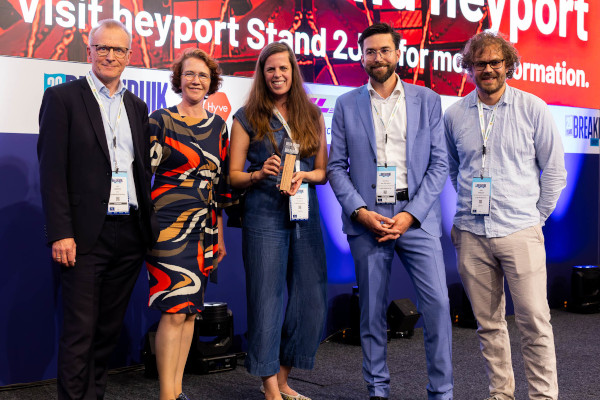
Second: Pullens serves as judge for Breakbulk Europe’s Green World Awards. Left to right: Jan Herberg, Christel Pullens, and the founders of Albatrosdigital: Ilse Rodewisjk, Dr. Nico Van Der Kolk and Erik Verboom. Credit: Hyve
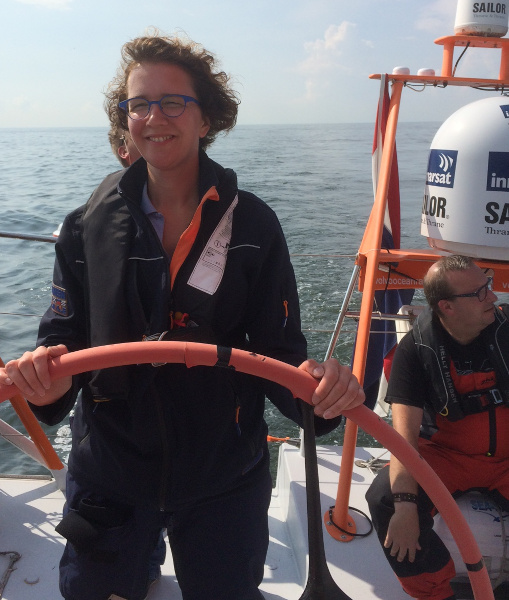
Third: Pullens is involved with the Sea Ranger Service, a social enterprise focused on maritime conservation and training young people for work at sea. Credit: Christel Pullens





.png?ext=.png)






.png?ext=.png)





_1.jpg?ext=.jpg)