Mega-Project Strategy Pivots as GCC and Iraq Prioritize Supply Chain Security
_2.jpg)
While the mega-project ambitions of Saudi Arabia, the UAE and Iraq remain high, the industry is entering a more calculated phase, with the focus shifting from mere capacity to “corridor resilience” and early-stage technical engagement.
In a Breakbulk Middle East main stage panel session, moderated by Vanessa Welch, managing director of V3 Consulting, industry leaders noted a major change in client demands compared to the pre-Covid era. Decisions are no longer driven solely by cost and capacity, but by the industry’s ability to provide alternatives during geographical shocks.
Karim Omran, VP group commercial at Red Sea Gateway Terminal, emphasized that customers now demand a “backup plan” for their projects, with clients seeking “one-stop-shop” providers to manage complex multi-stakeholder chains. “Traditionally, cost and capacity were the main drivers behind decisions,” he said. “Now there’s more focus on resilience of the corridor itself.”
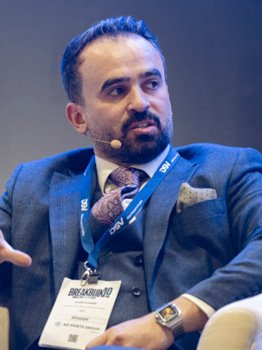 Yasser AlYassin, VP Global Projects and Industry Solutions for MEA at DSV, revealed that logistics partners are being called in during the feasibility study phase, before tenders are awarded. This allows for “scenario planning” to account for cross-border friction and regional instability.
“Today what we see is early engagement, but much more focused on reliability and anticipation of what could go wrong and how strong the partner is that can actually take responsibility, create alternatives, provide innovative solutions and financially cover it,” AlYassin said.
Ben Collins, global project cargo manager of MSC, stressed that “unpredictability” had become a huge consideration in project planning. “Literally overnight plan A can fall apart very quickly and then it just depends on your network, the skillset, what’s at your disposal about how quickly plan B — or even C — can come to fruition.”
Despite geopolitical “noise”, the panel was bullish on Iraq in particular, citing a surge in infrastructure, power and construction awards.
Contrary to some narratives, Collins said infrastructure capacity in the country is already functional. MSC now operates its own terminals at Umm Qasr port in southern Iraq as well as rail and trucking services heading inland from southern entry points and into the northern regions via Türkiye. “The commitment goes way beyond vessels,” he said.
DSV reported that after a period of stagnant growth, recent awards in Iraq’s energy and power sectors are expected to trigger a “big peak” in projects in the coming months. “We are very much active from the DSV side,” AlYassin said.
Panelists also touched on a looming “talent war” to staff these complex routes.
Omran summed up the new market reality: “It’s not that you can’t find the right talent. It’s that to get the right talent costs more. The question for organizations now is: Are you willing to invest in the local expertise long enough for them to develop?”
Top photo (L-R): Ben Collins, Karim Omran, Yasser AlYassin, Guo Zhong, Vanessa Welch. Credit: Credit: Ulysses&Crew
Second: Yasser AlYassin, Credit: Credit: Ulysses&Crew




.png?ext=.png)







.png?ext=.png)






_1.jpg?ext=.jpg)