
Policy Pivot Aims to Steady Markets, Yet Risks Volatility and Investor Hesitation
By Iain MacIntyre
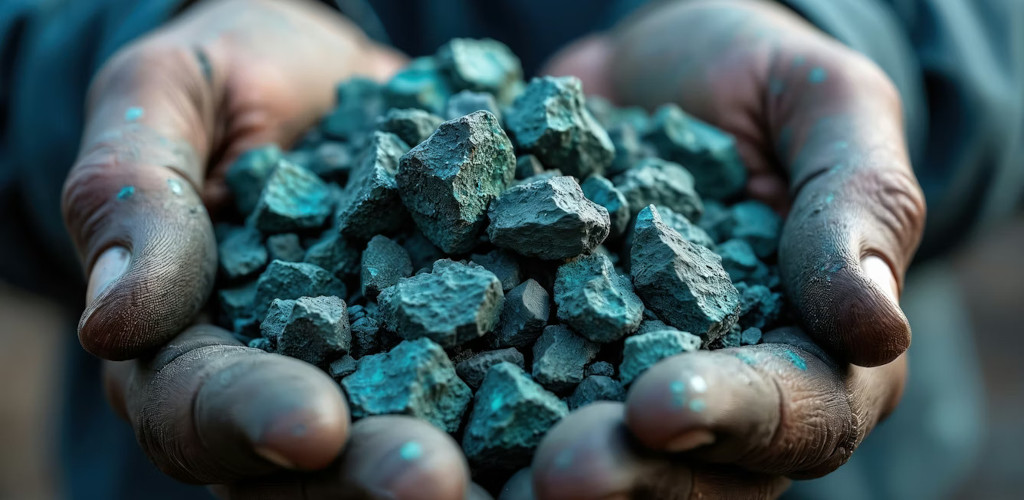
The DRC is banking on export quotas to transform its cobalt industry, but can the policy unlock domestic processing and new opportunities for breakbulk?
From Issue 2, 2026 of Breakbulk Magazine
(4-minute read)
A range of mining, processing, infrastructure development and breakbulk shipping stakeholders are waiting for the dust to settle on another significant policy reset on cobalt exports from the Democratic Republic of the Congo (DRC), initiated on October 16, 2025.
With the DRC said to provide over 70% of global cobalt supply, its Authority for the Regulation and Control of Strategic Mineral Substances’ Markets (ARECOMS) caused a supply shock when announcing a temporary ban on cobalt concentrate exports in February last year. Initially set to end on June 21, that ban was twice extended to ultimately conclude on October 15.
The following day, ARECOMS introduced a new quota-based export system. According to the International Energy Agency (IEA), cobalt export allocations were set at 3,625 tonnes for October 2025, and 7,250 tonnes for both November and December 2025.
Annual export quotas for 2026 and 2027 were set at 96,600 tonnes, a figure that includes a base allocation of 87,000 tonnes distributed among mining companies on a pro-rata basis according to historical export levels, and a strategic reserve of up to 9,600 tonnes for nationally significant projects, to be allocated at ARECOMS’s discretion.
Stockholm-based African Security Analysis (ASA) said the DRC’s “major recalibration” aims to manage supply to international markets and stabilize and potentially support global cobalt prices while ensuring guaranteed volumes for domestic processing and nationally strategic projects.
Noting the DRC currently remains “indispensable” to the manufacture of electric vehicle (EV) batteries, renewable energy storage and digital infrastructure manufacturing, ASA stated the move from “blunt prohibition to quotas” aims to prevent global shortages that could trigger volatility, secure better pricing power and downstream partnerships and ensure feedstock availability for national refineries and battery ventures.
“This policy shift is not merely a trade adjustment but a strategic lever in the global energy transition,” states ASA. “The DRC is signaling that it intends to act as a rule-setter, not just a resource supplier.”
However, ASA also warned that the policy’s current risk outlook includes allocation disputes, potential price spikes and volatility, industrial bottlenecks and investor uncertainty due to unclear implementation.
“The DRC’s move from an export ban to a quota regime recalibrates the cobalt market but introduces new uncertainties. Companies and governments alike must anticipate quota politics, regional leakages and volatile pricing.”
 Olimpia Pilch, chief strategy officer of Critical Minerals Africa Group, said the government’s flipflopping and last-minute notices have eroded trust, adding to uncertainty rather than providing a secure and attractive investment environment.
“While the quota policy and associated rules offer the DRC greater control over the export of minerals, whether the Government can keep up with associated bureaucracy without creating unnecessary delays and business disruptions remains to be seen,” Pilch said.
While it is widely acknowledged that a key driver of the policy is to incentivize domestic processing of cobalt, Pilch questioned if that outcome could transpire to significant degree in reality, particularly if such a transition was expected of the mining firms.
“Precursors production is highly dependent on end-use intended and client specifications. [And the] qualification period of new suppliers takes time — it’s a multi-year process — prior to ramp and scale. “Miners are not typically processors or refiners of materials so this supply chain segment carries significant risk due to typically low-profit margins, price volatility and monopolization by China.”
Pilch does not expect the DRC to emerge as a significant EV manufacturer, despite reports that building plants there can be up to three times cheaper than in the U.S. “EVs made in the DRC will not find a natural market in the U.S. or Europe due to tariffs in the U.S. and carbon rules of origin requirements in the EU.
“Ultimately, any manufacturer that can be attracted to the DRC will be competing directly with Chinese manufacturers, where cost of industrial energy is similar to the DRC, but there is significant know-how, scale-up expertise, access to subsidies and evolved domestic ecosystems providing necessary precursor materials for anodes and cathodes, rather than just cobalt-derived materials in DRC.”
However, Pilch sees some potential for the policy to stimulate domestic manufacturing, albeit with caveats, which would in turn require supporting infrastructure, creating opportunities for the breakbulk shipping sector.
“To move products to markets, well-maintained and modern infrastructure that cuts down transport time is essential. This requires roads, bridges, rails and access to deep-water ports,” she said. “The question that is often overlooked is where the market lies. Purchasing parity, infrastructure challenges and poor access to energy limit domestic and regional markets for EVs.
“However, some potential exists for two-wheelers. [But] most products would need exporting, and it is unlikely that the DRC will be able to compete against China. Processing and refining are energy and water intensive so build-out of increased capacity is required to match scale of ambition.”
Pilch provided a final observation on the DRC’s future cobalt export policy decisions.
“If the DRC increasingly makes it difficult to export cobalt ore or concentrate, there is a risk that major original equipment manufacturers will move away from cobalt-chemistries. This would prove a disastrous gamble for the DRC to bet its economic growth strategy on fickle EV chemistries.”
Iain MacIntyre is a New Zealand-based, award-winning journalist, with lengthy experience writing in the global shipping scene.
Top photo: Shutterstock






.png?ext=.png)











.png?ext=.png)









_1.jpg?ext=.jpg)