Geopolitical Instability a Catalyst for Operational Disruption
By Amy McLellan and Simon West
Companies including AAL, RAK Ports, Maersk Project Logistics, Fracht and the Port of Dover explore the vulnerabilities, opportunities and shifting dynamics defining nine crucial maritime gateways.
From Issue 2, 2026 of Breakbulk Magazine.
(7-minute read)
International trade depends on a handful of narrow waterways, and when they’re hit by disruption, the effects are felt across the whole system. From the Singapore and Malacca Straits, a single, high-traffic corridor moving a quarter of global seaborne trade, to the Strait of Hormuz, where blockades this year have throttled energy and industrial supplies, these passages are vital to keeping global trade and commerce moving smoothly.
Geopolitical instability is often the catalyst for operational disruption: The Suez Canal remains the fastest bridge between Asia and Europe, but recent shocks have shown how quickly efficiency can give way to delay, while the Black Sea is now a high-risk environment since Russia’s invasion of Ukraine. The Panama Canal highlights a different pressure point: climate, where water levels now determine shipping schedules. In Europe, the Strait of Gibraltar and the English Channel handle dense, complex traffic with little room for error.
Together, these chokepoints form the backbone of global logistics, where resilience has emerged as the industry’s defining priority. Read on as we navigate the world’s most critical maritime chokepoints, and the risks and opportunities shaping them today.
Singapore Strait
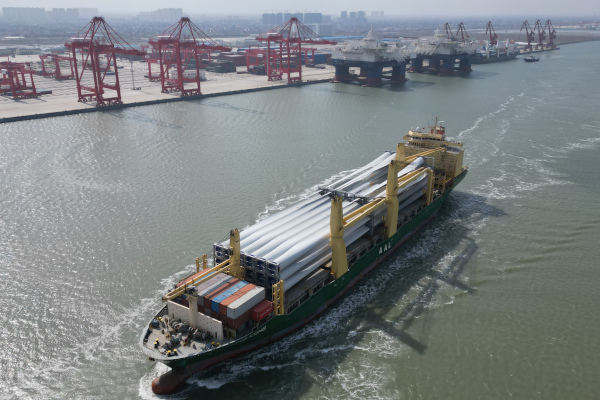 Singapore not only hosts one of the world’s largest and advanced refining complexes, but it is also the world’s leading maritime bunker hub, supplying more marine fuel than any other port globally and making it a central node in global energy logistics. Little wonder that the Singaporean government invests heavily in surveillance, enforcement and maritime security infrastructure to keep the waterway open.
From a navigational and commercial standpoint, the Singapore Strait serves as the natural entry and exit point of the Malacca Strait, and together they operate effectively as a single, continuous waterway. And what a waterway: It’s responsible for carrying 25% of global maritime trade. While the Singapore segment holds exceptional significance for global bunker supply, the Indonesian and Malaysian portions constitute the true strategic chokepoint due to their narrow passages and concentrated vessel traffic.
“The Malacca and Singapore Straits form one of the world’s most critical maritime corridors,” said Marc Willim, global head of chartering at AAL Shipping, which sends about 60 vessels through the straits each year, placing the company among the many operators navigating one of the busiest maritime zones worldwide. “It’s comparable in traffic density to the English Channel.”
Malacca Strait
While piracy in the Malacca Strait has been significantly reduced over the past decade, occasional incidents still occur.
“These are typically limited in scope, often involving theft of paint and ropes and primarily affecting vessels at anchor rather than those in transit,” Willim said, adding that such incidents bear little resemblance to the more severe piracy events historically seen in regions such as the Gulf of Guinea or off the Horn of Africa.
He attributes this to efforts by the adjoining states (Indonesia, Malaysia and Singapore) to maintain robust and coordinated patrol regimes involving naval and air force assets.
“These joint security initiatives have been effective in mitigating threats and ensuring navigational safety,” said Willim. “At present, there is no indication of any imminent risk that would disrupt or block the Malacca Strait; only a deliberate intervention by a major global power could realistically impede traffic.”
Strait of Hormuz
If there were any lingering doubts about the strategic importance of the Strait of Hormuz, then the military conflict between the U.S and Israel on one side and the Islamic Republic of Iran on the other will have dispelled them.
At the time of writing, this narrow passage separating the Arabian Peninsula and Iran remained effectively closed to most international shipping. The blockade has triggered a severe global shipping crisis and the largest disruption to energy supplies since the 1970s. It has also led to mounting shortages of vital materials such as petrochemicals, fertilizers, aluminum and helium.
Hugh Cox, chief commercial officer at breakbulk-handling RAK Ports in Ras Al Khaimah, the closest major port in the UAE to the Strait of Hormuz, pointed to the waterway’s additional role in supporting major manufacturing and EPC hubs that supply projects across the U.S., Europe, Africa and the Indian subcontinent.
“Realistically, you’re talking about a shipping channel that’s only around three to five kilometers wide. And without that access, you get a buildup of pressure. Right now, there’s effectively a chokehold — we can’t access vessels to move that freight out. But what you’ll see, once things open up, is a surge. Cargo is still being manufactured and then effectively banked. As soon as the Strait reopens, there will be a rush to move it, and a clear knock-on effect as everyone tries to push volumes out at once.
“It’s a critical piece of natural infrastructure, and the world needs it to be open, whether from an energy, project, cargo or manufacturing perspective.”
Suez Canal
 The Suez Canal is one of the most critical maritime chokepoints in the global logistics system. Roughly 12–15% of international trade passes through the canal, including about 30% of global container traffic, with cargo moving through the canal estimated to exceed US$1 trillion annually.
Strategically, the canal provides 10–14 days shorter transit times on Asia–Europe routes, which means significant fuel savings, lower vessel operating costs and reduced emissions. The waterway has seen a number of disruptions in recent years, most notably the Evergreen blockage in 2021 and the Red Sea Crisis that started in late 2023 when a wave of Houthi attacks targeted commercial vessels and tankers.
“Despite these disruptions, the maritime industry has shown remarkable adaptability, with Cape of Good Hope rerouting, alternative transshipment hubs and adjusted vessel deployment and schedules,” said Rafael Vicens, head of Maersk Project Logistics, IMEA.
Vessel owners, he said, have adopted additional precautions, including war risk insurance, real-time security intelligence and route diversification tactics, while the wider supply chain has shown strong resilience.
“Many project cargo shippers have adapted by building more schedule contingency into EPC logistics and staging cargo through regional hubs (Middle East, Mediterranean),” Vicens said, adding though that all of this comes at a cost in longer transit times, higher freight rates and increased uncertainty.
“For project cargo, chokepoints like the Suez Canal are not just about transit time; they are about schedule certainty,” Vicens said. “When you are moving turbines, reactors or mining equipment, a delay of even a week can impact construction timelines worth millions of dollars per day. What we are seeing now is a shift in mindset; logistics planning is moving away from pure efficiency toward resilience, with more contingency routing and earlier planning built into major projects.”
Strait of Gibraltar
The Strait of Gibraltar carries more than 10% of global maritime trade by value and is the sole link between the Atlantic Ocean and Mediterranean Sea. And while it is a low-profile chokepoint, according to Tim Killen, head of growth for projects at Fracht Group, the Strait “combines natural, operational and geopolitical risks in a way that makes it deceptively fragile.”
Some 300 ships per day pass through the waterway, with a mix of ocean-going vessels, tankers, ferries and naval traffic, meaning there is a risk of collision and delay. Navigation can be challenging with strong opposing surface and deep currents as well as frequent high winds, which complicates maneuvering, especially for large vessels.
With no alternative western sea route into or out of the Mediterranean, if the Strait of Gibraltar became blocked or unusable then vessel traffic would effectively be stuck. “It is a low-profile shipping area, with a low-frequency disruption, but as the Straits have very little redundancy capacity in the event of disruption, the impact could be very high,” Killen said.
The Black Sea
The Black Sea sits at a strategic crossroads linking Eastern Europe with Western Asia, and forms a key stretch of the Middle Corridor, a 7,000-kilometer overland and maritime route connecting China to Europe and bypassing Russia.
The waterway has long been a vital artery, not just for bulk commodities, but also for oversized and specialized cargoes moving across the region.
Since Russia’s invasion of Ukraine, however, the Black Sea has become a more complex and high-risk operating environment. According to Hans-Kristian Pedersen, an analyst for Denmark-based Risk Intelligence, there were 20 reported incidents last year involving commercial vessels, up from 16 in 2024, although these figures remain low relative to overall traffic, and collateral damage is still the most likely risk.
“A key shift over the past four years is the expansion of naval drone capabilities, with drones now able to traverse the Black Sea,” Pedersen said. “Concerns about drifting mines remain, but containment efforts are underway via the Romania–Bulgaria– Turkey tri-party initiative and separately by Ukraine. Sightings and controlled detonations continue to be reported.
“Reports of drone debris and drifting “stray” drones have also become more frequent, reflecting wider drone use by both Ukraine and Russia. Attack intensity tends to come in waves, often appearing intended to influence political and diplomatic negotiations as much as to secure military advantage.”
English Channel
The English Channel is one of the most strategically important trade routes in the world, with more than 500 vessels using this narrow and closely controlled corridor every single day.
These crowded waters face potential disruption from a number of risks, including geopolitical and regulatory changes, such as post-Brexit border requirements, which can increase checks and paperwork and lead to congestion if not carefully managed.
Environmental and operational threats are equally significant, said Doug Bannister, CEO of the Port of Dover, located at the center of the Channel. These threats include severe weather events that can interrupt crossings and infrastructure constraints, particularly on surrounding road networks, which can escalate local delays into national supply chain issues.
“And there is always the presence of security risks, including cyber threats that pose ongoing challenges to the safe and efficient flow of traffic,” Bannister said. “Continued cooperation between UK and EU authorities and digital solutions are essential to streamline border processes and help mitigate disruption on this vital route,” he added.
Panama Canal
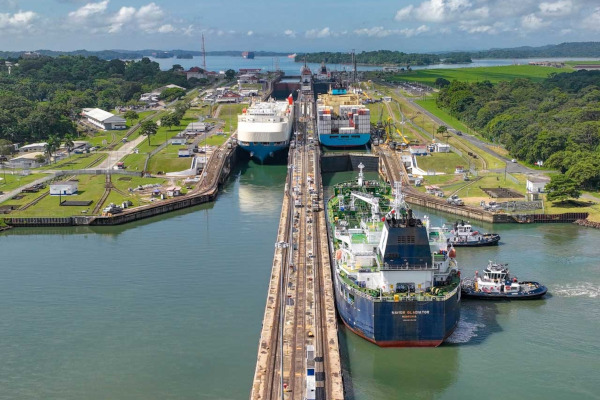 The Panama Canal is a highly strategic maritime corridor linking the Pacific and Atlantic Oceans. Water availability is its most critical constraint, according to Maria Dixon, director of ISM Shipping Solutions. “The Canal is not just a passageway,” said Dixon. “It is a freshwater-dependent infrastructure system, and that dependency shapes everything from transit slots to vessel draught limits.”
Drought in 2024 led to draught restrictions, reduced daily transits and prioritization mechanisms that directly affected commercial planning and freight economics. While 2025 brought improved rainfall, it would be a mistake to treat that as a permanent correction, Dixon said. “The lesson from 2024 is that climate variability is no longer an exceptional event. It must be treated as a planning baseline.”
Mitigation requires long-term water management projects along with operational flexibility in transit planning and transparent communication with operators so that restrictions are anticipated rather than reactive.
Disruption can also arise from traffic concentration, lock maintenance cycles or incidents involving large vessels, which can have a cascading effect across global schedules. An overreliance on just-in-time logistics adds a layer of systemic risk. “When operators plan with minimal buffers, even minor canal restrictions can amplify into wider supply-chain disruption,” Dixon said.
While Panama is politically stable, there are external geopolitical risks: Shifting trade routes, sanctions and conflicts elsewhere in the world that suddenly reroute cargo flows toward or away from the canal. “When global tensions rise, the canal often becomes a pressure valve for redirected trade,” Dixon said.
Northern Sea Route
Until recently, the severity of the Arctic climate meant the Northern Sea Route was inaccessible to mainstream shipping. A warming weather system, however, means there is renewed interest in this polar shortcut that cuts journey times between Asia and most European ports by as much as 30% to 40% compared with taking the Suez Canal.
However, many believe the NSR is likely to remain a niche route for many decades, despite the shrinking Arctic sea ice season. Seasonal reliability, geopolitics, insurance exposure and a lack of infrastructure and contingency options also count against it.
“These issues can make it a commercially and operationally fragile route, even as climate change improves physical access,’ Killen said, pointing out that there are not enough suitably rated ships or icebreakers to make the NSR a scalable, mainstream route in the near- to mid-term.
Resilient Under Pressure
From drought to Brexit, grounded container ships to war zones, the project cargo industry is well-used to adapting to the unexpected. “We work in a resilient and solution focused industry, where the management of change and disruption are commonplace,” Killen said. Among the lessons learned is the need to prioritize innovation and resilience over optimization.
“As an experienced and successful project logistics community, we understand the importance of assessing and designing solutions which include alternative options, allowing contingency time and contractual flexibility rather than relying on one single best or cheapest option every time,” he said, stressing the importance of early logistics involvement.
“This allows us the time and capacity to scenario plan and identify potential risk, so that projects understand the potential that disruption could have, rather than waiting for events to happen,” Killen added.
The benefit? Faster decision-making during disruption, reduced schedule impact and projects able to pivot and move forward rather than stall when the unexpected happens.
The impact of geopolitics on key trade lanes will be the focus of a panel discussion at Breakbulk Europe 2026. Geopolitics in Action: The Domino Effect on Trade Routes will take place on the Breakbulk Live Stage on Wednesday, 17 June from 10:30am to 11:20am.
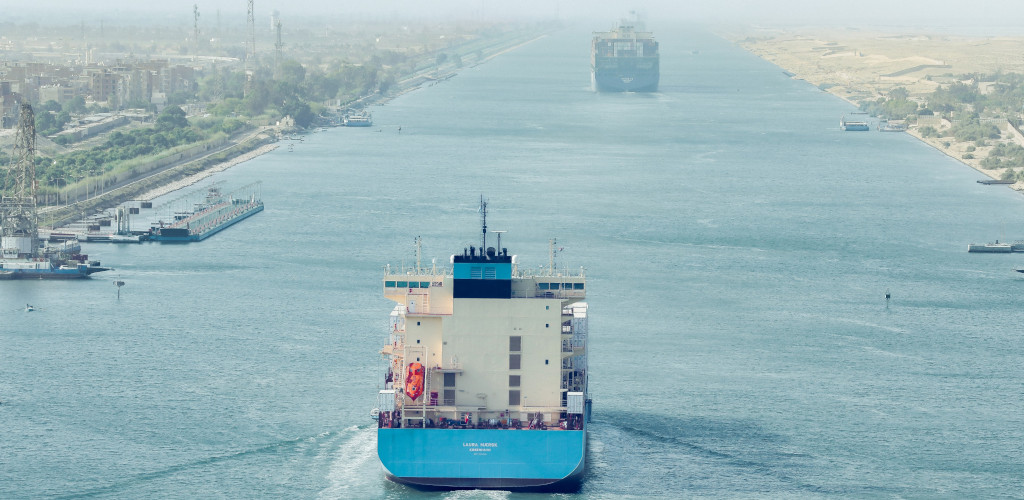
Top photo: The container vessel Laura Maersk sails through the Suez Canal. Credit: Maersk
Second: An AAL vessel leaves China through the Singapore Strait carrying wind towers, granite and bulk. Credit: AAL
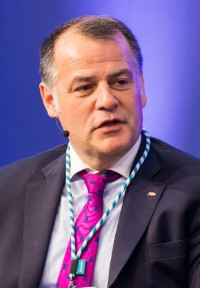
Third: Rafael Vicens, Maersk Project Logistics. Credit: MPL
Fourth: A car carrier navigates the locks at the Panama Canal. Credit: Panama Canal Authority


.png?ext=.png)





.png?ext=.png)




_1.jpg?ext=.jpg)