FIFA World Cup Is Becoming a Catalyst for Infrastructure Investment Beyond Football
By Liesl Krog
Morocco’s joint hosting of the 2030 World Cup is kicking off an infrastructure boom far beyond the football pitch. DSV TRO, DHL Global Forwarding, Maersk Project Logistics and Eurogrues weigh in on the opportunities opening up.
From Issue 3, 2026 of Breakbulk Magazine
(5-minute read)
On a 150-hectare site outside Casablanca, Morocco is building what is intended to become the largest football stadium in the world. With seating for 115,000 spectators, the Grand Stade Hassan II is a striking symbol of a country gearing up to welcome fans from around the globe for the 2030 FIFA World Cup.
Morocco will co-host the tournament with Spain and Portugal, while so-called centenary matches to mark the 100-year anniversary of the first World Cup will be staged in Argentina, Paraguay and Uruguay. But the North African country is pulling out all the stops to convince FIFA that the final whistle should blow on African soil.
The scale of the development is unprecedented, according to Hamza Lahmamssi, head of strategy and development at DSV TRO, a joint venture (JV) between DSV and ALF Holding, the parent company of Moroccan freight forwarder TRO. “We have never had this concentration of projects in the country at the same time,” he said. “For project cargo, it is the strongest market we have ever operated in.”
 For Aziz Bensouda, who heads up projects at DSV TRO, the event is about far more than football. “The World Cup is like a showcase,” he said. “We will show the football matches, but we will also show the capacity of the country.”
Hatim Jaadour, sales and marketing director at Morocco-based heavy-lift specialist Eurogrues Maroc, described the buildout as “one of the most ambitious infrastructure programs in Morocco’s history.”
With estimates placing the investment at between US$34 billion and US$40 billion across some 35 cities, the description is apt. But rather than simply building for a tournament, Morocco is using the World Cup as an accelerator for a much broader development program, showcasing its capabilities while strengthening its standing as one of Africa’s leading economies.
“The headline projects are of course the new Grand Stade Hassan II near Benslimane and the renovation or expansion of the stadiums in Tangier, Rabat, Marrakech, Agadir and Fez,” Jaadour said. “But on top of that you have the extension of the high-speed rail line from Kenitra to Marrakech, worth around US$9.6 billion, an airport program of US$2.8 billion that aims to almost double capacity from 38 to 80 million passengers, including a major new terminal at Casablanca Mohammed V, and port upgrades of around $7.5 billion.”
On the maritime front, development is advancing at Nador West Med on the Mediterranean coast and at the new Dakhla Atlantic port, which is expected to establish an important gateway to West Africa.
Yet beyond the stadiums, transport links and ports dominating the headlines, another infrastructure program could generate even greater and more sustained demand for project cargo.
“There is also a dimension people talk about less, but which matters enormously for our industry: water,” Jaadour said.
Morocco is rolling out a far-reaching water-security program centered on large seawater desalination plants along its Atlantic and Mediterranean coastlines. Seventeen plants are already operating, while the national program envisages more than 20 facilities with combined production capacity of 1.7 billion cubic meters a year by 2030.
The pipeline stretches from Casablanca, where what is expected to become Africa’s largest desalination plant is under development, to Agadir, Dakhla, Nador and other coastal centers.
Alongside its water program, Morocco is expanding its wind and solar capacity and reinforcing its electricity grid as it works towards generating more than 52% of installed capacity from renewable sources by 2030. Jaadour expects energy, water and rail to generate the most sustained breakbulk demand, while stadium and airport projects will create shorter but more intense peaks.
This acceleration of Morocco’s wider development strategy could prove to be one of the World Cup’s most important legacies, according to Rafael Vicens, head of Maersk Project Logistics for India, the Middle East and Africa.
“Morocco began developing its infrastructure long before it was awarded the right to co-host the World Cup,” he said. “It is using the event as a trigger to speed up a much bigger national development strategy.”
Heavy Cargo, Hard Deadlines
 The scale of the program is already translating into growing volumes of heavy-lift and out-of-gauge cargo, according to El Mehdi Mohamed Kacimi, head of ocean freight at DHL Global Forwarding Morocco. “We are seeing mega-structure and structural steel components measuring between 40 and 65 meters, which require specialized multi-axle trailers and breakbulk vessels,” he said.
Other cargo includes crawler cranes, piling rigs, concrete batching plants, prestressed steel elements and large-diameter piping.
Renewable-energy projects are adding another layer of complexity to the cargo mix. “This includes wind turbine blades often exceeding 80 meters, heavy generator nacelles and segmented steel tower sections moving through ports such as Tanger Med and Nador West Med,” Kacimi said.
The growing pipeline is also changing the way projects are planned. Jaadour said international water and energy EPCs were involving local logistics specialists much earlier in the tender process.
“EPCs are now prequalifying local lifting and heavy-transport partners much earlier in the tender cycle than before,” he said. “Volumes are already rising, particularly in energy, water and rail, while the stadium-driven peak will run through 2027 and 2028.”
Behind this acceleration is a deadline that cannot be moved. Bensouda said 2030 had become a shared national objective extending well beyond the projects directly associated with the tournament. “Whether it is finance, education or health, everyone has made 2030 the common objective, even sectors that are not directly related to the World Cup,” he said.
Navigating the Pressure Points
While optimism is palpable among Morocco’s project-logistics community, the scale and speed of the build-out are inevitably placing pressure on the country’s ports, customs processes and inland transport networks.
Industry representatives remain confident that Morocco has the infrastructure and expertise to deliver. However, when moving heavy cargo against an immovable deadline, delays matter.
“Most conventional breakbulk and project cargo enters through Casablanca, and with the current level of activity, congestion has been a problem,” said Lahmamssi. “The port authorities have responded well by introducing round-the-clock operations, 365 days a year. It has made a difference and the situation is improving.”
He expects Nador West Med, due to open later this year, to provide additional capacity and help ease the pressure.
But the challenges do not end at the port gate. “Transporting oversized, heavy-lift and out-of-gauge cargo across Morocco involves navigating a mix of physical, regulatory and operational challenges,” said Kacimi. “Moving cargo inland from northern and coastal entry points can mean negotiating steep gradients, tight hairpin bends and narrow mountain passes. Older bridges may have weight restrictions, while highway overpasses present clearance constraints. Extra-heavy or high loads, such as transformers, can therefore require structural engineering assessments and alternative routes.”
Then there are the permits, route surveys and escort arrangements that have to be secured before heavy loads can move on public roads. While the larger ports like Tanger Med, Casablanca and Jorf Lasfar offer modern heavy-lift facilities, smaller regional ports lack high-capacity shore cranes or specialized ro-ro ramps.
Both Vicens and Jaadour point to customs as another stumbling block. “Temporary admission for specialized equipment is manageable but documentation-heavy and EPCs new to Morocco often underestimate this,” Jaadour said. Vicens agreed that customs remained a challenge. Although automated systems have improved the process, clearing cargo can still be time-consuming and delays are not uncommon.
Last-mile delivery presents another difficulty. Jaadour pointed out that many World Cup construction sites are in dense urban areas, while energy and desalination projects are often in remote coastal locations. “None of these challenges is a blocker, but they all reward early transport engineering and experienced local partners,” he said.
Beyond the Final Whistle
 Despite the pressure points, project cargo activity is expected to intensify as construction moves towards its peak.
Kacimi expects demand for heavylift and breakbulk services to continue climbing over the next two to three years, with the market entering its most intensive phase for structural components, construction machinery and other heavy equipment.
“Project cargo and heavy-lift demand is expected to peak by 2028,” he said. As major civil works are completed, the cargo mix will gradually shift from structural steel and heavy machinery to fit-out materials, technology systems and hospitality supplies.
Morocco’s heavy-lift and transport operators are already investing in anticipation of the demand. Eurogrues Maroc, for example, has added a 1,250-tonne-capacity crane to its fleet and plans to expand its exceptional transport division with additional modular axle lines and prime movers.
For Jaadour, however, the opportunity does not end when the tournament does. The railways, airports, ports and roads being developed will remain in place, opening new corridors and improving access to projects across the country. At the same time, the water, renewable energy and industrial programs are expected to continue generating oversized and heavy cargo well into the next decade.
Vicens was equally confident that there would be work beyond 2030. Morocco’s proximity to Europe, improving infrastructure and relatively developed logistics systems have already made it an attractive base for companies targeting North and West African markets, he said.
But physical infrastructure is only part of the equation. Bensouda stressed that Morocco would also need to continue developing the skills required to operate and maintain what it is building. “When infrastructure grows, people have to grow at the same time and at the same speed,” he said.
For Lahmamssi, the real test will be whether the current momentum can be sustained after the tournament. “The hype is there, but the goal is to plan beyond the World Cup,” he said. “We have to make sure that these developments remain and do not become a bubble that bursts after 2030.”
Jaadour believes the country could ultimately become a staging and consolidation hub for projects across West Africa. Achieving that will require continued investment in equipment and skills, as well as further improvements to permitting and customs processes.
“The 2030 World Cup is a milestone, not a destination,” he said. “Morocco’s ambition is structural, with the country aiming to become the reference platform between Europe and Africa for industry, energy, water and logistics. Our message to the breakbulk community is simple. Come early.”
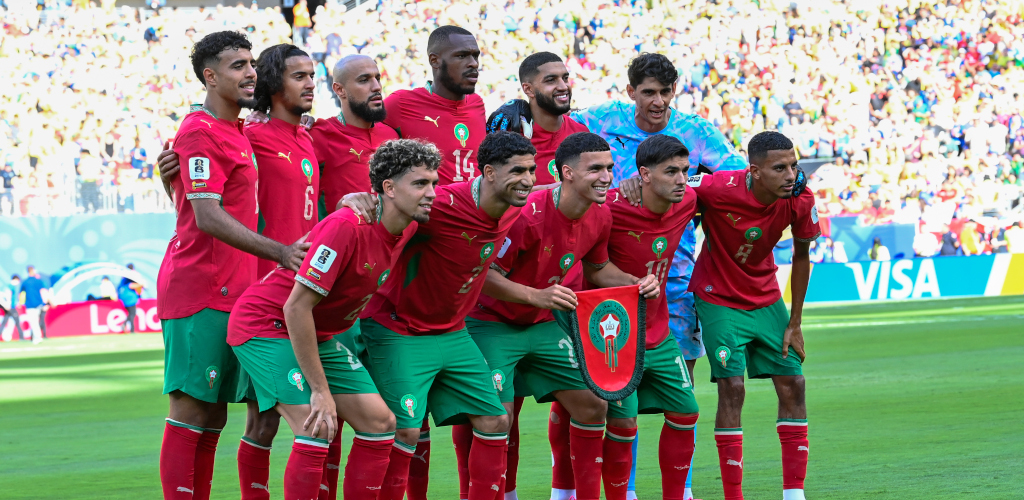
Top photo: Team Morocco at 2026 FIFA World Cup. Credit: YantsImages
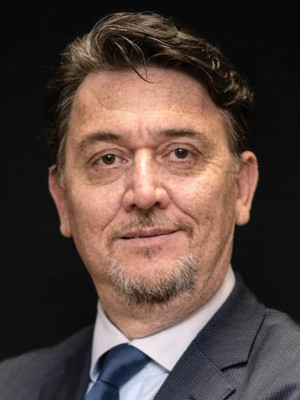
Second: Aziz Bensouda, DSV TRO. Credit: DSV
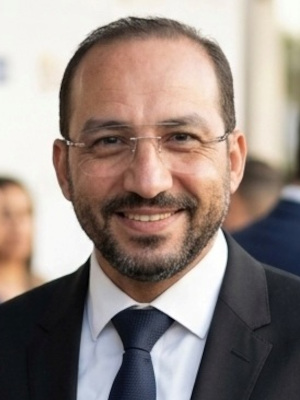
Third: El Mehdi Mohamed Kacimi, DHL Global Forwarding Morocco. Credit: DHL
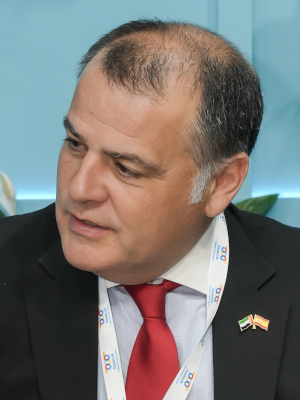
Fourth: Rafael Vicens, Maersk Project Logistics. Credit: Maersk


.png?ext=.png)




.png?ext=.png)



_1.jpg?ext=.jpg)