Former Halliburton Executive John Vogt on Complying With U.S. Customs Authorities
John Vogt, former Halliburton vice president of global logistics and a visiting professor at the University of Houston-Downtown, presents the latest in his series on Incoterms, the internationally recognized set of trade rules that sellers and buyers must follow when devising a contract for the shipment of goods. This week, John looks at U.S. tariffs and the importance of complying with customs authority when exporting cargo.
New installments are published on the Breakbulk news page and in our online BreakbulkONE newsletter.
_1.jpeg?width=220&height=275) After a rather tumultuous last year, it is worth looking at a few simple things to round off our thinking on international trade.
After a rather tumultuous last year, it is worth looking at a few simple things to round off our thinking on international trade.
U.S. tariffs have been imposed, and as earlier notes recorded, there are new trade agreements in place with countries that not only supply goods to America but also are willing to consume American products and in many cases, to invest in American manufacturing facilities.
Countries that maintain an alleged imbalance of trade now face higher tariffs. Much as there has been wailing and gnashing of teeth about the world coming to an end, the effect has been very beneficial for the U.S. Inflation has not risen significantly, much to the chagrin of many of the pundits who forecast doom and gloom. More importantly, the rate of increase in the debt of the country has slowed and the current account for the balance of payments has decreased from about US$440 billion in the second quarter to US$250 billion in the third.
This dramatic reversal was primarily due to tariffs and new trade agreements, so the upheaval was well worth it for the long-term benefit of the U.S. economy. This does not mean the issue has been solved, as the debt to GDP ratio remains near the 120% mark — an alarming ratio. Inherently the new trade deals require investment into the U.S. economy, which should accelerate GDP growth, but until this ratio falls below the 100% mark to match other developed countries, the problem will persist.
Non-Diversion Rules
For trade, the temptation is to have goods sent to a country and then sent on by an agent to another country to avoid duties via a second commercial invoice (CI) with a different country of origin. It is inherent in the World Customs Organization’s principle of trade — not to mention many countries’ legal requirements — that the delivery of goods must be to a known location for consumption in the country of that location.
In fact, there is a check that the delivery address and buyer are located in the same country, and if not, this may raise the risk of queries. The end result is that goods must be delivered to the designated address in the CI and must, to the knowledge of the supplier, be for use by the buyer and within that country. This is the non-diversion (sometimes called the anti-diversion) statement required by the U.S. International Trade Administration department of the Department of Commerce.
The so-called minimum anti-diversion statement for goods exported under U.S. Department of Commerce authority states: “These commodities, technology, or software were exported from the United States in accordance with the Export Administration Regulations. Diversion contrary to U.S. law is prohibited.” Note, this is the minimum statement and leaves a beautiful end statement of “Diversion contrary to U.S. Law is prohibited.” This applies not just to trade law, rather any law. So diverse legal requirements in including the denied parties (not allowed to trade with) to the Foreign Corrupt Practices Act (FCPA), which limits which parties can be involved in payments.
Many people confuse the requirements of this statement. It is for goods to be delivered to where the CI says they will be received — and used. This is not for a temporary location, which is then used to send goods elsewhere. The strict interpretation of this statement is that knowing the goods would be used elsewhere is a problem which could well attract the customs authority’s attention.
If the goods have a license attached to them, then that could be considered a customs violation. Violations may come with fines, but the worst possible outcome is having the customs authority involved in your operations. That is time-consuming and expensive, even if they do not issue fines.
Avoiding Violations With Customs
In this, as with all trade, ignorance is not bliss, and should you be found to have done repeated exports where the goods are then sent on to another country or user, or used to change the origin, for example, your company must defend the practice to the customs authority. The onus on your company is to follow all the rules, and the burden of proof is on your company to show you complied. This is very different from civil cases where the burden of proof is on the prosecutor.
Goods that are traded on the water such as commodities will probably have no license restrictions and may have a particular buyer and delivery location on the CI for export. Trading happens while the ship in international waters. The goods will have the final destination and buyer in the import CI details.
However, the exporting customs authority will still require the final purchaser and destination to be advised to the sending customs authority via an amended CI. But what happens if your company records the final destination or buyer to be contrary to the denied parties list or sanctions list? That is when you report quickly to the customs authority and your program needs to withstand their questions.
The adherence to the rules and regulations of the customs authority is the responsibility of your company’s and no one else. The broker or freight forwarder you appoint will not assume your liability. In all normal contracts, the broker or forwarder assumes no liability or at most liability if their actions constituted gross negligence. Good luck with proving gross negligence and hiding behind that with the customs authority.
If all this doesn’t make you want to ensure your trade is done professionally and correctly, then you are heading for problems. This means you need a business logistics person who can oversee and enforce compliance. This is not a customs broker but a highly skilled logistics person with business and contract sense who understands this broad field, including customs laws and regulations. With the rate of change in the trade market, this person and their knowledge is essential.
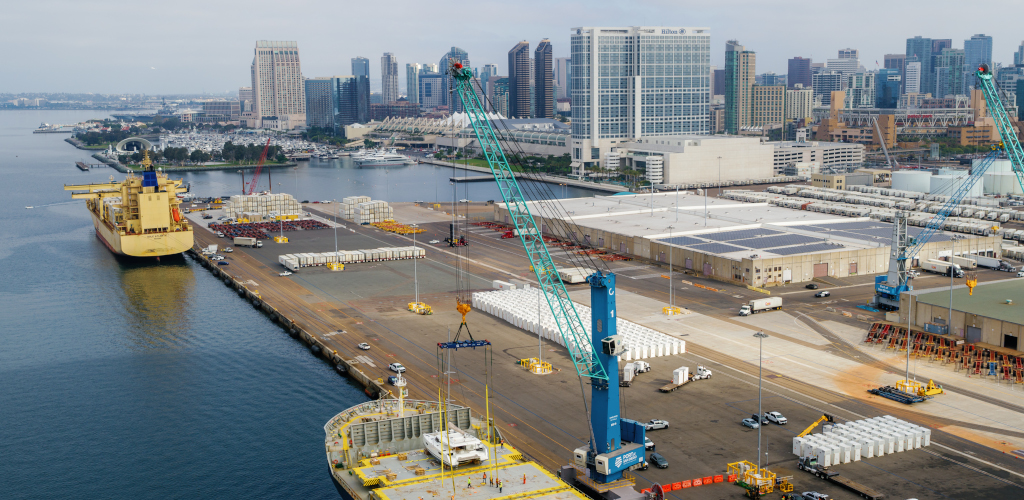
PHOTO CREDIT: Port of San Diego


.png?ext=.png)





.png?ext=.png)





_1.jpg?ext=.jpg)