Operators Adapt To Shifting Trade Corridors, Delivery Risks and Heavier Cargoes
Confronted by geopolitical tensions and supply chain disruption, project logistics operators are rethinking trade routes and prioritizing delivery certainty over cost alone.
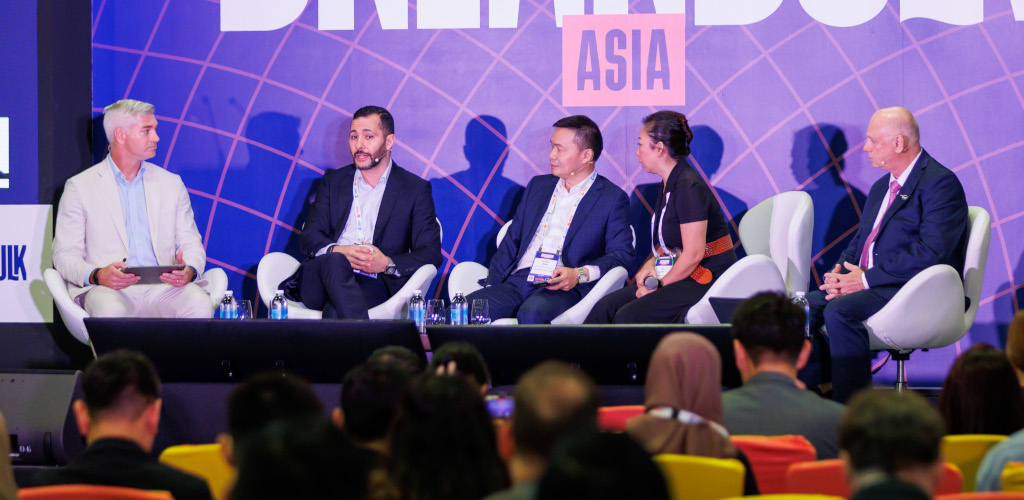
That was a core message from the “Fragmentation, Flows and the Future of Trade: Navigating Asia’s New Trade Map” panel session at Breakbulk Asia in Singapore. Moderated by Scott Taylor, director of project business development at UTC Overseas, the panel brought together Farid Belbouab, Group CEO of Gulftainer; Huang Liping, party secretary and chairman of China’s Jiangsu Suzhou Port Group; and Thomas Groves, senior director of project logistics for Oceania at DP World.
For Gulftainer, the shift has meant developing alternative trade corridors to reduce dependence on the Strait of Hormuz. Belbouab said the company was building what he called a “zero reliance” model on the strategically important waterway.
 New dry ports were constructed in the UAE “within weeks” and vessels chartered to keep cargo moving from Sharjah to upper Gulf markets. Extra cranes and trucks alone were insufficient; resilience, he said, depended on customs, ports, shipping and cross-border transport working together. Gulftainer was also pursuing a US$2 billion investment program to expand quay and yard capacity.
“We’re not waiting for the next crisis to invest. Trade needs resilience and continuity today. And that’s what we’re capable of providing,” Belbouab said.
Crucially, the cheapest or shortest option is no longer necessarily the best, as customers increasingly value “certainty” that cargo can be discharged safely and reach its final destination. Belbouab urged cargo owners to engage authorities early to secure licenses, customs approvals and road permits. An extra two or three weeks in transit, he added, should not necessarily be seen as a problem.
Liping echoed the emphasis on certainty, arguing that cargo owners should prioritize the “most reliable” and safest route over the cheapest option. He said larger ports and logistics companies would become increasingly important because of their resources and ability to manage unforeseen risks.
He also warned that fast-changing tariffs and other regulations could extend processing times, increasing demand for port storage capacity and more efficient terminal handling.
“That is why higher efficiency and faster operations will be key in the future,” Liping said.
Tightening the Entire Supply Chain
Groves said adapting to changing project plans requires checking that alternative arrangements work across the entire supply chain, from vessel availability and fuel costs to onward transport.
He described recent data center shipments to Australia, which involved a mix of breakbulk, liner and roll-on, roll-off (RoRo) vessels. Some units were discharged in Melbourne and trucked to Sydney, requiring close coordination of vessel availability, fuel surcharges, road transport and rail capacity to keep projects on schedule.
Groves also warned that battery energy storage systems (BESS) are getting heavier, with units that once weighed about 36 tons are now reaching 40 to 48 tons, with 50- and 69-ton examples also cited at an Australian industry event.
For ports, shipments of 80 to 90 batteries can mean heavy-haul truck movements and complex scheduling, while major Australian ports allow only five days to clear cargo from the wharf. Groves said the trend would affect ports more broadly within the next year.
Taylor had the last word, urging the sector to be prepared to adjust to the “new norm”.
“In a world where everything is changing seemingly hour to hour, I think the most important thing that we can all bring to the table is the ability to adapt to change,” he said. “Because the change is going to happen. It’s just how we adapt to it.”
Read more: Asia’s Trade Boom To Fuel Infrastructure Investment
Top photo: Scott Taylor, Farid Belbouab, Huang Liping (and translator), Thomas Groves. Credit: Hyve
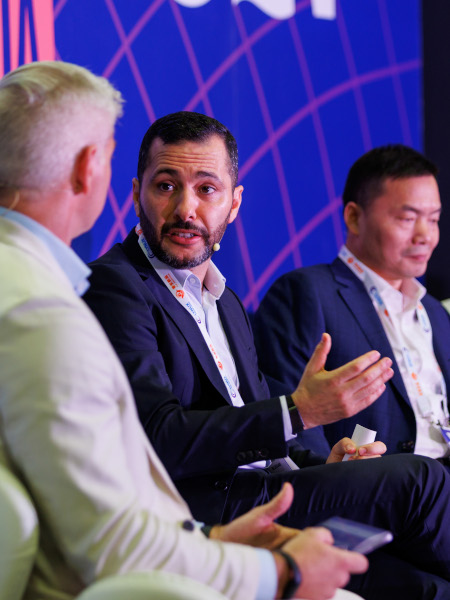
Second: Farid Belbouab addresses his fellow panelists. Credit: Hyve