Real team strength comes from inclusion and psychological safety, not visible difference
Hiring a woman into an all-male team is not diversity. It looks like diversity. But if the environment she enters does not make room for different ways of thinking, approaching problems or challenging assumptions, she will adapt to fit the existing culture within months. The gender ratio changes. The thinking does not.
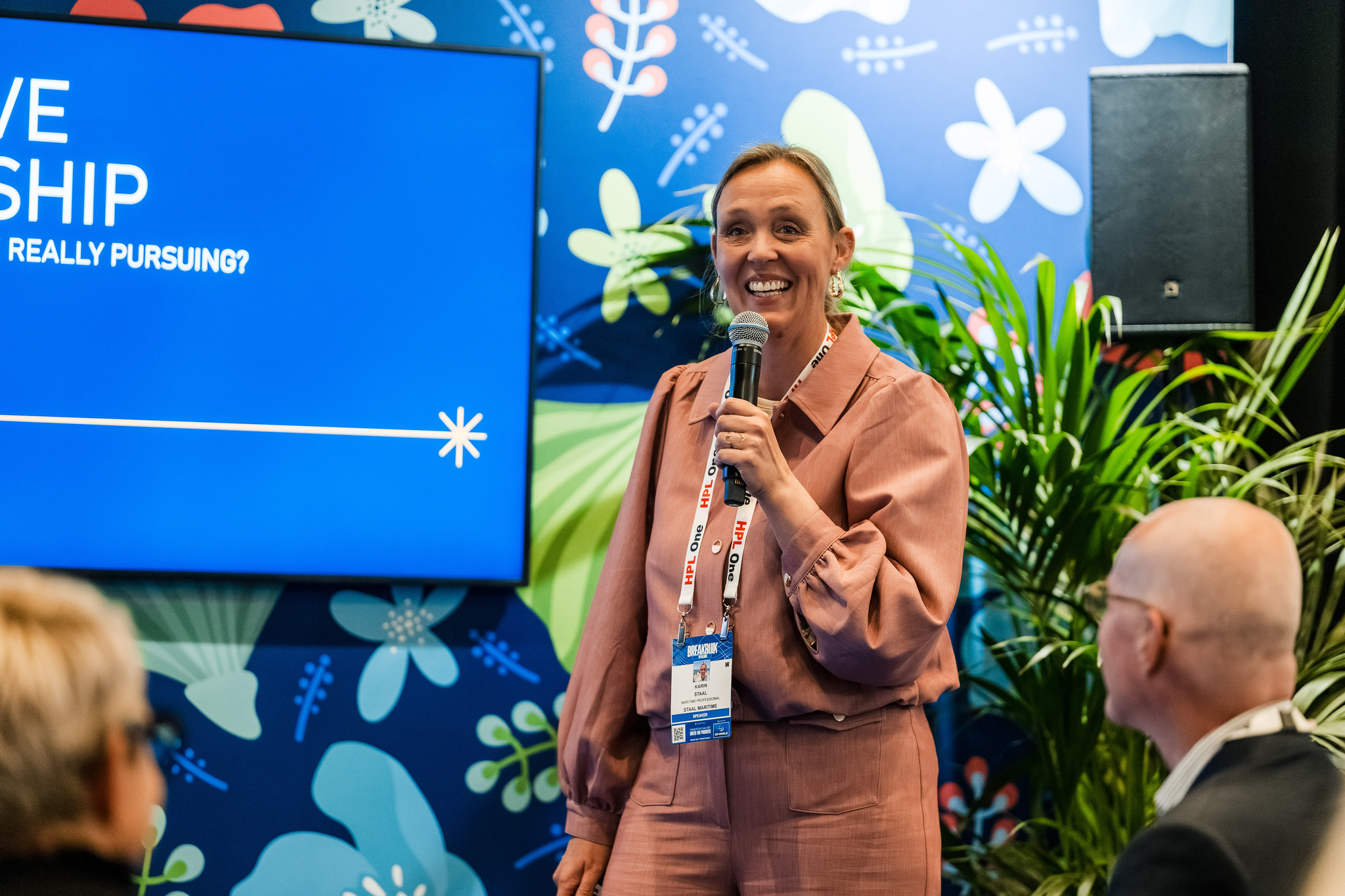
That is the argument Karin Staal, maritime professional and founder of Staal Maritime, brought to a Women in Breakbulk workshop at Breakbulk Europe. With 27 years in the maritime industry, including time as a seafarer, crewing professional and port state control officer, she has seen the pattern repeat itself across organizations.
"What is the diversity again?" she said, describing a superintendence team of 14 men that hired a 25-year-old woman and celebrated it as a milestone. "She sits on the toilet and the other ones are standing in front of the toilet. But that is the only diversity you have."
Her case is that the industry is measuring the wrong things. Gender, nationality, age and culture are visible. They are easy to count and report. But what actually makes a team stronger is diversity of experience, personality, expertise, communication style, risk perception and ways of thinking. And none of that matters unless the environment allows those differences to surface and be used.
That environment has a name: psychological safety. Staal draws on the work of Harvard professor Amy Edmondson, who defines it as the belief that it is safe to take interpersonal risks. Speaking up, flagging a problem, stopping an operation because something feels wrong, challenging a superior's decision, admitting a mistake. In an industry where the consequences of silence can be catastrophic.
Staal uses an exercise to make that feeling hit home. Participants receive a number on their foreheads, between one and five, without being told their own number. The assignment is to build the strongest team in 10 minutes. Without being able to ask or tell anyone what number they have, people gravitate toward the high numbers and avoid the low ones. Within minutes, some people are being sought out by everyone. Others are being ignored.
"Ten minutes, people, is a very long time if you are being ignored," she said. "That is what it feels like when you are in a non-inclusive environment."
Building the kind of team where that does not happen takes time and follows a predictable path. Staal uses the Tuckman model, a foundational theory developed by psychologist Bruce Tuckman in 1965 that maps the five stages teams move through: forming, storming, norming, performing and adjourning.
In the forming stage, people need clarity, structure and predictability. In shipping, where crew changes mean teams are constantly being rebuilt from scratch, this stage recurs far more frequently than in office environments. A single crew change does not just introduce a new person. It resets the entire team dynamic.
The storming stage is where friction emerges. Different opinions, frustrations, competing approaches. Most leaders want to avoid this phase. Staal argues the opposite: if a team never storms, something is wrong.
"If you say my team never has friction or there is never any frustration, then there is seriously something wrong within your team," she said. "This is actually the most interesting phase."
Norming follows, where the team begins to communicate through the friction, trust grows and ways of working are established. Performing is where the team functions as one, problems surface early and people help each other. Staal believes most shipping companies think they are in the performing stage. Most are not.
The fifth stage, adjourning, is often overlooked but matters particularly in maritime. It is how a team closes out: the knowledge transfer, the reflection, the recognition of what was accomplished together. A proper handover is one example. It is also directly connected to retention.
The leadership qualities needed to move a team through these stages are not about men or women. Staal cited a challenge posed by researcher Loes Donhoff: why focus on female representation when the more useful question is about masculine and feminine as leadership qualities? Those qualities exist in all of us regardless of gender. Decisiveness, competitiveness and control sit on one side. Curiosity, empathy, listening, collaboration and vulnerability sit on the other. Neither set alone is sufficient.
"The future does not require less of one," Staal said. "It requires a balance of both."
The question for any leader is not what the team looks like. It is what the team experiences.
"Psychological safety is not what leaders intend," she said. "It is what people experience."
About This Series
This article was developed from a workshop hosted by the Women in Breakbulk Lounge during Breakbulk Europe.
Title: Inclusive Leadership: Which Diversity Are We Really Pursuing? Date: Wednesday, June 17, 2026 Location: Women in Breakbulk Lounge, Breakbulk Europe, Rotterdam Ahoy Speaker: Karin Staal, Maritime Professional, Staal Maritime Session URL: https://europe.breakbulk.com/agendas/event-agenda/inclusive-leadership-which-diversity-are-we-r
Become a member of the Women in Breakbulk network and get all the news and event updates about women in our industry.




.png?ext=.png)







.png?ext=.png)





_1.jpg?ext=.jpg)