Geopolitics, AI and Mother Nature Transform Global Investment
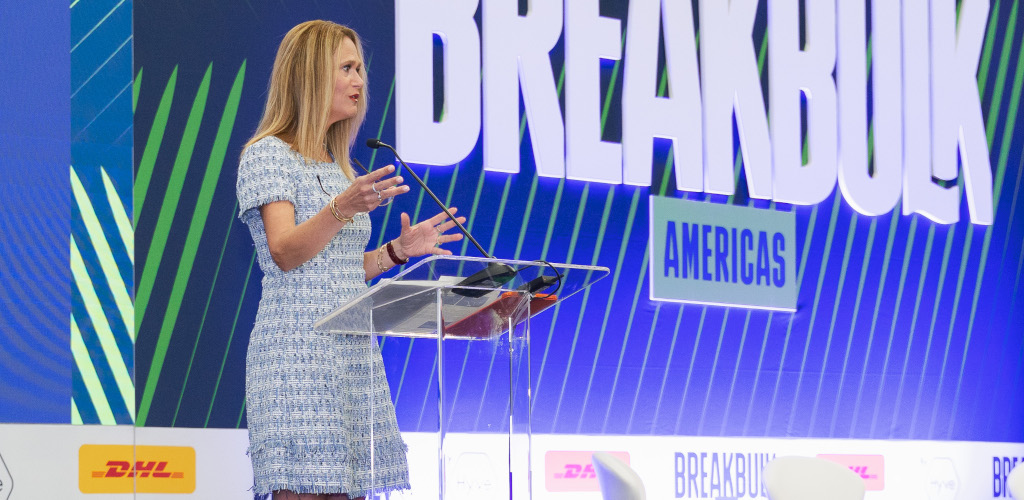
By Breakbulk Staff
Global trade is being transformed by a mix of geopolitics, climate pressures, energy constraints and the rapid buildout of AI infrastructure, according to trade and supply chain expert Lori Ann LaRocco.
From conflict impacting energy flows to droughts threatening vital waterways, companies can no longer view supply chains in isolation, LaRocco said during her keynote at Breakbulk Americas.
“Trade takes people and every node in the world of trade matters,” she said, warning that a disruption at one point can reverberate throughout the entire system. The Panama Canal, Strait of Hormuz and other strategic corridors are becoming particularly important as companies look for alternative routes.
One of the most striking pressure points is the rapid expansion of data centers and AI infrastructure. LaRocco said investment is accelerating, but shortages of raw materials could limit how quickly projects are built and brought online.
Oil and gas-based chemicals are particularly important, she said, noting that thousands of everyday products depend on them, including materials used in data centers, semiconductors and other industrial applications. “It’s great that you can build a data center, but if you do not have the coolant to run that data center, it’s just an empty box."
Those constraints are also feeding into prices. LaRocco said chemical producers are bringing in smaller quantities because high prices make companies reluctant to carry excess inventory. The result, she said, is a supply chain in which inflation can build well before a product reaches a store shelf.
“I like to write about inflation brewing in the warehouse,” she said, describing how goods produced months ahead can absorb higher costs before reaching consumers.
Climate-linked disruptions are adding another layer of uncertainty. LaRocco pointed to drought affecting the Panama Canal and said vessel operators are already adjusting routes as delays and surcharges make some transits less attractive. She highlighted the shifts toward U.S. West Coast gateways and rail connections as evidence of how quickly trade can adapt when established routes become constrained.
“Resilience isn’t a buzzword,” she said. “It’s the actions and the why and what you deploy that make it so important.”
Lori Ann LaRocco is president of trade consultancy firm LaRocco Consulting and a former global logistics reporter for CNBC.
Photo credit: Marco Wang Photography


.png?ext=.png)




.png?ext=.png)




_1.jpg?ext=.jpg)