Rhenus Delivers Over 400 MT of Equipment From China to Canada
By Simon West
Colin D’Abreo, VP Director of Rhenus Project Logistics, shares insight on how project teams in Canada and China worked side-by-side to transport over 400 metric tons of equipment — including two, 80-ton transformers — in support of a major Canadian industrial project.
From Issue 4, 2026 of Breakbulk Magazine
Q: Can you describe the route, from the transformers leaving the factory in China, across the ocean into Canada, and finally to the installation site?
Colin D’Abreo: Our project logistics teams in Canada and China worked closely to transport these units through a multimodal journey combining ocean, rail and road transport, along with specialized methods, to safely deliver and position them for installation. All starting from the manufacturing site in China, the transformers were lifted out from the factory and safely prepared and loaded onto a vessel to be transported via ocean from the Port of Shanghai across to the Port of Tacoma. Following customs clearance and cargo handling operations, the transformers were transferred to rail for the majority of their inland journey to Ontario, Canada. The final leg of the journey was completed via specialized road transport to the project site, where the units were prepared for installation. Rhenus Project Logistics coordinated with its local teams in China and Canada, as well as port operators, ocean carriers, rail providers, and local transportation partners to ensure the equipment moved safely and according to schedule.
Q: What specialized heavy-haul and lifting equipment was required for each stage of the journey?
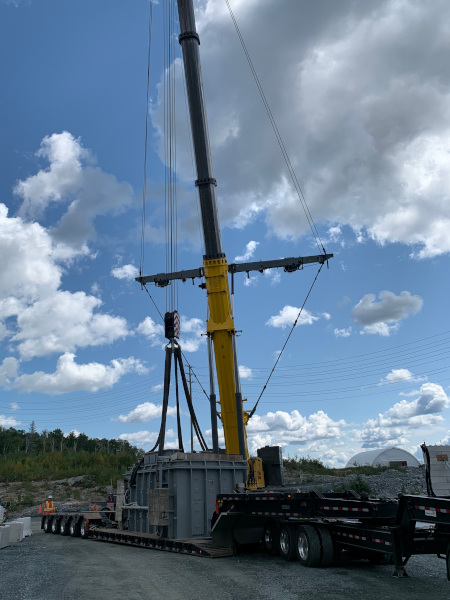
CD: Heavy-lift equipment was used to safely lift out the transformers from the manufacturing site to the Port of Shanghai where our projects logistics team in China arranged the preparation and loaded the units onto the RoRo vessel. Upon arrival in North America, specialized handling equipment was used to facilitate the transfer of the cargo to rail transportation for its inland journey. For the final delivery in Ontario, our team in Canada transferred the units from rail onto an SPMT for transport to the project site. Once onsite, jack-and-slide and turntable rigging systems were used to precisely maneuver and position the units onto their concrete foundation pads for installation.
 Q: What were the biggest challenges you identified at the beginning of the project? Were there any unexpected challenges during execution?
CD: As with many oversized cargo projects, the biggest challenge at the beginning of the project was determining the safest and most efficient transportation route, given the complexities based on Canada’s terrain and climatic conditions. This required careful planning, from factory lift-out, customized lashing and securing, and specialized port loading to ocean voyage planning. To address these challenges, the teams in China and Canada worked closely together from early planning stages, combining heavy-lift expertise with local knowledge to validate route surveying solutions and mitigate potential risks.
During execution, maintaining alignment between the transformer’s production schedule and the transportation timeline required ongoing coordination. Rhenus Project Logistics worked proactively with the manufacturer and adjusted shipping schedules as needed to keep the project on track. This close collaboration has allowed the team to deliver the transformers safely and on time to the port of Tacoma in just 17 days.
Q: How important was having Rhenus teams in both China and Canada to the success of the operation? How did the two teams work together?
CD: Our greatest strength and success at Rhenus is our global team. We have developed a team of experts around the world with the knowledge and experience to move and execute complex and oversized cargo, which is critical to the success of this project. Our teams in Canada and China worked closely together from the early planning phases of the project, maintaining constant communication and sharing their expertise to address challenges and identify the most effective solutions. From the beginning, the teams in China and Canada collaborated on route surveying, operational planning and the execution strategy for transporting the transformer from the manufacturing facility in China to its final installation site in Canada.
By combining local expertise and maintaining close coordination throughout every stage of the project, the teams successfully found solutions on how to navigate through Canada’s complex terrain and climatic conditions while ensuring the safe and efficient delivery of the transformers. While this project is still ongoing, it is a testament to the strength of Rhenus’ global project logistics network and demonstrates how expertise developed across different geographies can be leveraged to support complex international projects, delivering greater reliability and value throughout the supply chain.
Q: What was the most rewarding aspect of the project for you and your team?
CD: Like every project we complete, it is rewarding to see months of planning, coordination and execution come together successfully. What made this project meaningful was the close collaboration between our teams in China and Canada. Both teams combined their local expertise and worked through each phase and step of this specific project together, taking each challenge and advising one another solutions. Their teamwork, commitment and problem-solving capabilities highlight the strength of Rhenus global network and the value of collaboration, making this all worthwhile and successful.
Rhenus Project Logistics is an exhibitor at Breakbulk Asia 2026.
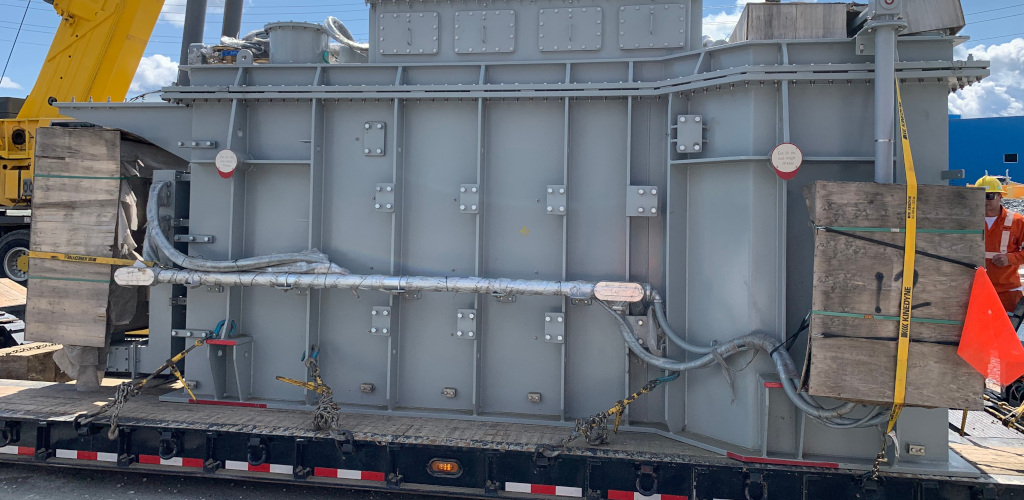
Top photo: Each 80-metric-ton transformer required transfer between ocean vessels, rail networks and specialized heavy-haul road transport before final installation at the site. Credit: Rhenus Project Logistics
Second: The transformers are transferred onto an SPMT for final mile delivery. Credit: Rhenus Project Logistics