Fracht’s Sharan Swaminathan on the Demands of North America’s Newest Sector
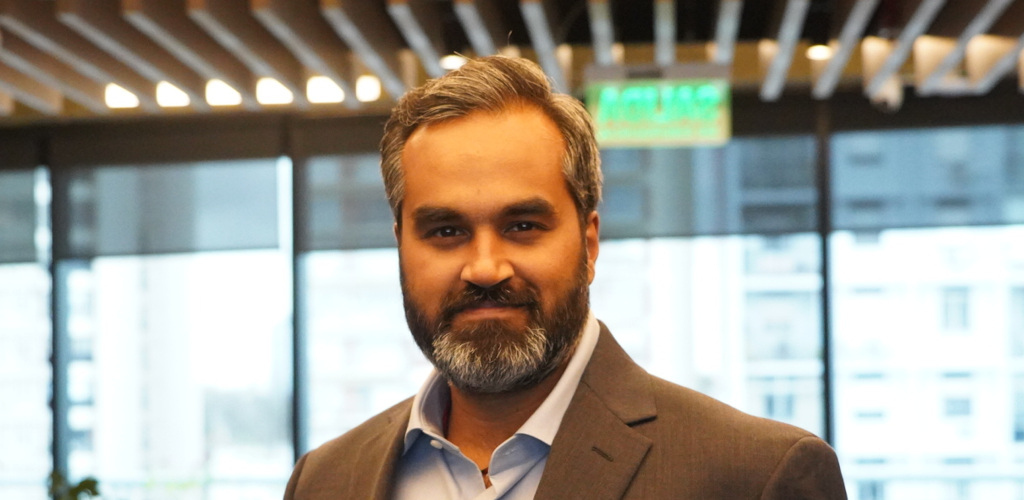
With 15 years on the owner’s side at BHP, Fracht North America’s Sharan Swaminathan shares his advice on winning work in the rare earth mining, processing and magnet manufacturing sectors.
From Issue 3, 2026 of Breakbulk Magazine
(3-minute read)
Sharan Swaminathan spent more than fifteen years in finance, commercial and supply chain roles at BHP, the world’s largest mining company. He led transformation across BHP’s technology, procurement and supply chain functions and devised BHP’s global inbound strategy, putting him in front of the EPCM contractors and freight forwarders working across BHP’s regions.
He has now joined Fracht North America as vice president of industrials. “Speaking the customer’s language is crucial, and in my short time here I can already see how much customers value a forwarder that thinks like they do,” Swaminathan says. With the energy transition drawing major mining players into the Americas, he sees a multiyear window for a nimble, solutions-driven provider like Fracht to become a market leader in project logistics.
A former UAE and Singapore national cricket captain, Swaminathan says bringing people together around a shared outcome has always come naturally to him.
Q: How do logistics requirements for rare earth mining, processing and magnet manufacturing projects differ from conventional projects?
Sharan Swaminathan: This is genuinely new territory for a lot of us in project logistics. From what I’ve seen so far, a few things look different from a conventional bulk project. The separation and magnet-manufacturing equipment appears far less standardized than what we’re used to moving for a copper or an iron ore project. Much of it looks first-of-kind and engineered-to-order, and a lot of it is still being built outside North America.
There’s also the question of how rare earth concentrate and process material gets classified and handled in transport, given the thorium and uranium that can come along with certain ore types, which taps into a compliance consideration. The value chain itself looks unusually fragmented geographically, with mining, separation and magnet-making often sitting in different states or countries, which changes the planning from a single corridor into something closer to a network problem.
There’s also a trade-compliance dimension that I think has become just as decisive as any physical requirement. Tracing where a component’s inputs actually came from is becoming as important as tracing the shipment itself. That’s a new kind of due diligence for our industry.
Q: How will your experience working for a major global mining company impact your view of project logistics?
SS: Having sat on the owner’s side of the table for most of my career, I understand the real constraints a project team operates under, the contracting strategy for the project, procurement staging, capital-approval gates, etc. It’s becoming even more crucial to speak the customer’s language and genuinely understand the terrain they operate in, the commercial pressures, the technical constraints and the reputational stakes they’re carrying.
That means doing the right level of due diligence upfront, not just to protect Fracht commercially, but to protect the owners too, by flagging a technical, commercial or reputational risk. I’d add one more thing: The owner’s team doesn’t need to solve every problem themselves. That’s actually one of the more valuable things I’ve learned moving to this side of the business. A true project logistics provider that’s worked across many projects and many owners can often solve a trade or a routing problem faster, and better, than an owner’s team.
Q: Which components create the greatest transportation complexity?
SS: Directionally, three things stand out to me: 1. The separation and processing equipment itself, since so little of it has been built at scale; 2. Any concentrate or process residue carrying naturally occurring radioactivity, which triggers a different handling and regulatory regime than a standard mineral concentrate; and 3. Precision magnet-manufacturing equipment, which tends to be high-value and, for now, still largely imported. In addition, the paperwork is as complex as the movement of the cargo.
Q: What specialized planning, equipment and expertise do these projects require from logistics providers?
SS: Sticking to the theme of just rare earth minerals, that’s a tough one. The bar for expertise has moved: It’s not just equipment knowledge, long lead times, dimension of cargo and other factors; it’s trade compliance and export-control fluency, because licensing requirements are shifting as fast as the geopolitics driving them. There is a level of education that needs to come through in the industry to get everyone on a level playing field.
Q: What is Fracht North America’s assessment of the project potential for this sector?
SS: We’re genuinely optimistic. The Americas overall look to us like they have a long runway ahead, not just in rare earths but across mining generally. We’re seeing real, concrete moves by major mining houses to establish or deepen their position here, and you can see it reflected in where these companies are choosing to put their people, not just their capital.
Read more: Critical Minerals: Bringing Processing Home
On the Breakbulk Live Stage at Breakbulk Americas: Critical Minerals and the New Americas Supply Chain. Tuesday, Sept. 22, 1:40pm - 2:25pm



.png?ext=.png)



.png?ext=.png)




_1.jpg?ext=.jpg)