Framework for better business relationships
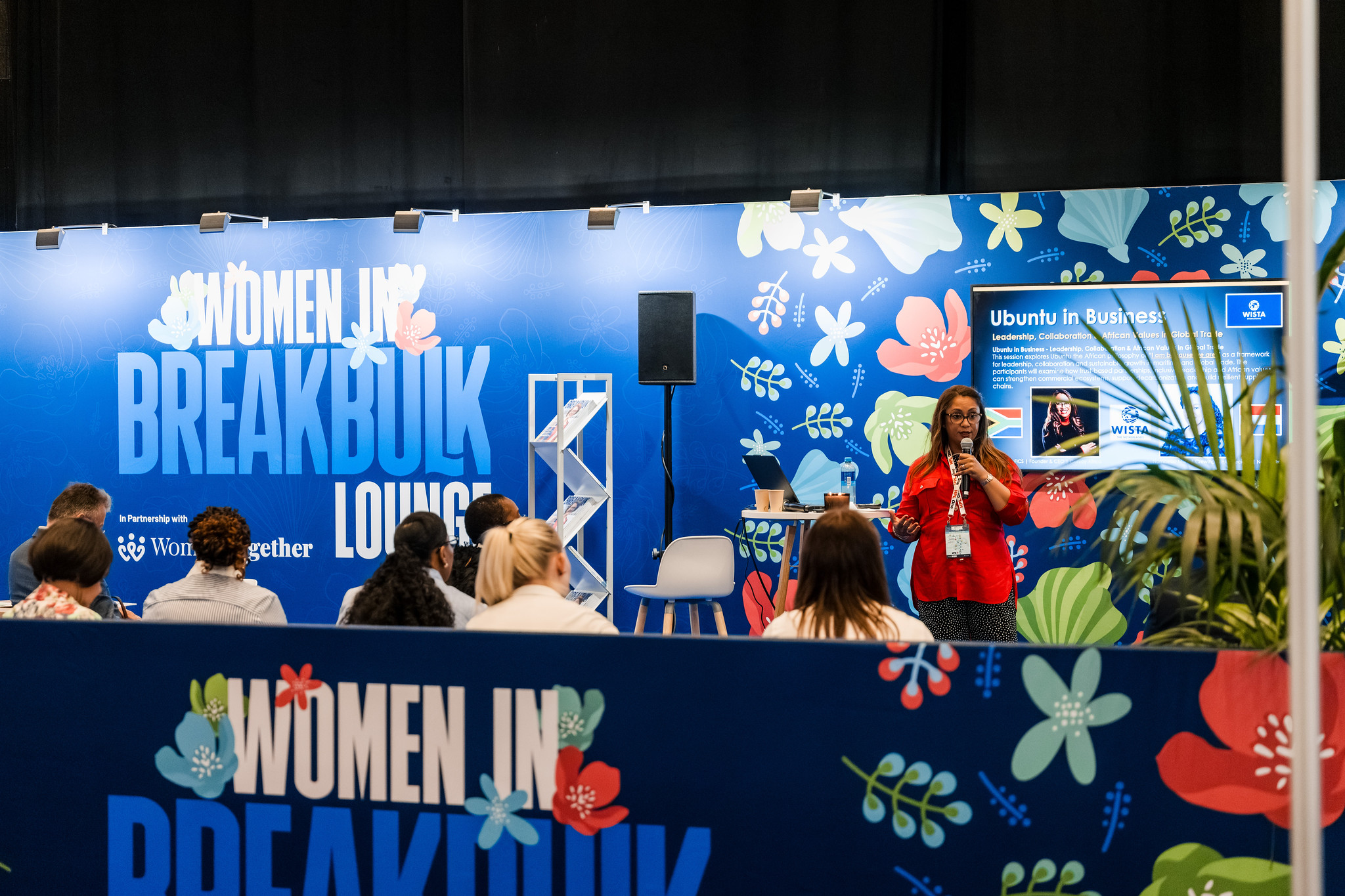
Before a single contract is signed, before a vessel is chartered or a berth is confirmed, something else has to be in place. Nura Conroy calls it the infrastructure of global trade. Not financing. Not logistics. The relationships.
"The transaction is the transaction," said Conroy, CEO of Conroy Africa and a shipbroker with more than 20 years of experience across tanker chartering, marine infrastructure, fuel trading and port concessions. "The relationship is the infrastructure of global trade."
Her framework comes from Ubuntu, the South African philosophy built on the principle I am because we are. It is a philosophy of mutual dependence, shared humanity and collective responsibility. In a global trade environment shaped by geopolitical fracture, sanctions, supply chain disruption and an energy transition that requires unprecedented cooperation, Conroy argues it has never been more useful.
Ubuntu uses the image of a candle to make the point. When you light another candle from its flame, the original does not go out. Lifting others does not diminish you.
Conroy grew up in Cape Town, a city shaped by global trade long before the term existed. Her family's roots trace back to the spice routes of the Dutch East India Company, the same trade flows that made Rotterdam what it is today. That history, personal and commercial at once, is part of why she speaks about Africa not as an emerging market to be entered but as a partner to be respected.
Africa is a growth market. It has natural resources the energy transition depends on. South Africa alone has mining capacity that could accelerate green hydrogen production. But relationships are not being built fast enough to unlock that potential.
"If you do not come closer to us and we do not take a step to you, we both lose," she said. "It doesn't have to be hope. We can do it. It's real. It's there."
A recurring barrier is a Northern Hemisphere tendency to enter African markets with assumptions rather than curiosity. In her experience working on risk management for large port infrastructure projects across Africa, deals were lost not because of financing or logistics but because of a failure in cultural understanding.
"Minds meeting around a table, not opposite at a table, where there is transparency, equity and agreement," she said. "We just see people. We respect the cultures, we respect what they've gone through, we respect the background that they've had."
Trust is what makes contingency planning possible. When sanctions shift a trade route, when a terminal faces congestion, when a war changes the calculus of a supply chain, the businesses that survive are the ones where the relationship was already strong enough to hold.
"You can have all your ducks in a row in terms of everything else," she said. "You can have the money on the table. But nobody's going to exchange any money if you don't have this."
Equity, in Conroy's framework, is not the same as equality. Equality gives everyone the same thing. Equity gives people what they need to catch up. The distinction matters in global trade partnerships, in team leadership and in how the industry brings the next generation forward.
"If we can have more trust, we can have more collaboration, we can have more inclusion," she said. "We can start sharing our values, learning and respecting and appreciating each other's. We don't have to wait three years to figure out if we have a deal."
About This Series
This article was developed from a workshop hosted by the Women in Breakbulk Lounge during Breakbulk Europe.
Title: Ubuntu in Business: Leadership, Collaboration and African Values in Global Trade
Date: Wednesday, June 17, 2026
Speakers: Nura Conroy, CEO, Conroy Africa / Nomcebo Msibi, Crewing and HR Specialist, N-SEA Group
Associations: WISTA The Netherlands
Become a member of the Women in Breakbulk network and get all the news and event updates about women in our industry.



.png?ext=.png)






.png?ext=.png)






_1.jpg?ext=.jpg)