Energy Transition Opportunities Offset by Sluggish Export Markets
For Breakbulk's Global Outlook 2027 series, industry leaders from AAL Shipping, Fracht Group and BBC Chartering explore the opportunities created by the region’s energy transition and infrastructure investment alongside challenges in traditional export markets.
From Issue 4, 2026 of Breakbulk Magazine.
(4-minute read)
Q: Looking ahead to 2027, how would you describe the business outlook for Europe’s breakbulk and project cargo sector?
Felix Schoeller, chief commercial officer, AAL Shipping:
Europe’s project cargo market is entering 2027 on a two-speed footing. Import demand remains the bright spot, driven by renewable energy investment and broader energy security priorities, which continue to support steady volumes into our Super B-Class fleet. Export remains more challenging, however, as the Persian Gulf, a key traditional market for European EPCs, machinery and steel makers, stays largely inaccessible, leaving Europe’s export project cargo outlook considerably more subdued.
Ruedi Reisdorf, owner, Fracht Group:
The outlook for Europe remains positive. Demand is being supported by substantial investments in energy infrastructure, grid expansion, industrial modernization and strategic supply-chain resilience. While freight markets may remain cyclical, the underlying project pipeline is strong. The defining trend for 2027 is that project logistics is no longer just about moving cargo. It is about managing risk, securing critical supply chains and enabling Europe’s energy and industrial transformation.
Ulrich Ulrichs, CEO, BBC Chartering:
I would describe the overall situation as stable and generally satisfactory, but not exceptionally positive. We continue to see renewable energy cargoes moving inbound and outbound, alongside outbound industrial goods including cables, transformers and engines.
Q: Which sectors or specific projects do you expect to be the biggest drivers of breakbulk and project cargo volumes in 2027?
FS: Renewable energy, especially offshore wind, remains Europe’s single biggest volume driver, alongside conventional power generation and data-center builds. We also expect defense-related infrastructure upgrades (ports, rail and dual-use corridors being reinforced for military mobility) to generate meaningful project cargo, as networks built to lighter commercial standards are brought up to heavier load capacity. Nuclear new-build and life-extension projects across the UK, France and Eastern Europe should add further momentum.
RR: We expect power transmission and grid infrastructure to be among the strongest volume drivers, alongside renewable energy, conventional power generation, battery storage and large industrial investment programs. Data centers are emerging as a major indirect driver, creating significant demand for transformers, substations and energy infrastructure. We also see continued activity in mining, metals, chemicals and selected oil and gas projects where energy security remains a strategic priority.
UU: Renewable energy projects will clearly be the main driver of cargo volumes in 2027. We expect demand to remain strong worldwide, also in Europe. In terms of trade flows, we currently anticipate import cargoes to outweigh exports. Europe is investing heavily in energy security, infrastructure and domestic industrial capacity.
Q: What impact do you expect these priorities to have on breakbulk demand in 2027?
 FS: These priorities are a clear positive for breakbulk. Energy security is accelerating offshore wind, LNG and grid-scale battery storage projects, while renewed industrial and defense investment is upgrading ports, bridges and rail links to handle heavier, oversized loads. This dual-use infrastructure is being built closer to project cargo specifications than ordinary freight standards, which should mean better accessibility and sustained demand for specialist heavy-lift tonnage like our 800-tonne-capable Super B-Class vessels.
RR: These investments create exactly the type of cargo that moves through the breakbulk and project logistics sector. New power plants, transmission networks, transformer programs, manufacturing facilities and energy transition projects require oversized and heavy-lift equipment. Beyond increasing cargo volumes, they also drive demand for engineering, route studies and specialized transport solutions. We expect energy-security and reindustrialization initiatives to remain among the sector’s most important growth drivers in 2027.
UU: While Europe’s focus on energy security, infrastructure and industrial resilience should, in theory, support breakbulk demand, we currently see only a limited impact from these investments. Renewable energy projects we indeed see a lot, but other goods suffer from “green deal” commitments of the EU and its member states. The European industry is facing increasing challenges from high energy costs and regulatory requirements such as EU Emissions Trading System (ETS) and FuelEU Maritime, which add costs and administrative complexity. As a result, some production is shifting within Europe or relocating outside the EU altogether. In addition, strong investment activity in markets such as the U.S. and China, particularly in data centers and AI-related infrastructure, appears to be attracting a larger share of industrial cargo demand than Europe at present.
Q: What do you see as the biggest challenges facing the sector over the coming year?
FS: Tightening environmental regulation, including FuelEU Maritime and the EU ETS, is raising operating costs just as port and inland bottlenecks add delay to project execution. Geopolitical instability around the Middle East and Baltic corridors continues to disrupt routing. For AAL, the defining challenge is balancing decarbonization investment — we’ve cut fleet Energy Efficiency Operational Indicator (EEOI) by nearly 20% since 2023 — with the heavy-lift flexibility our customers depend on.
RR: The main challenges are uncertainty and complexity rather than a lack of demand. Geopolitical tensions, sanctions, trade restrictions and changing regulations continue to reshape supply chains. At the same time, skilled labor shortages, infrastructure constraints, permitting requirements and increasing sustainability obligations add pressure. Successful project logistics providers will be those that manage risk proactively, maintain operational flexibility and remain close to customers throughout the project lifecycle.
UU: The biggest challenges are likely to come from geopolitical and regulatory developments. Ongoing conflicts in the Persian Gulf region and Eastern Europe, as well as the continued security situation in the Red Sea, have the potential to disrupt trade flows and increase transportation costs. In addition, tariffs, potential U.S. regulatory measures affecting shipping, Office of the U.S. Trade Representative (USTR), and a growing number of trade and transit restrictions worldwide, including constraints at the Panama Canal, continue to create uncertainty for global supply chains. In such an environment, maintaining flexibility and reliability will remain essential for all market participants.
Q: With global trade routes and supply chains being reshaped by geopolitical tensions, tariffs and sanctions, how is the European breakbulk and project cargo sector adapting?
FS: Flexibility and compliance have become essential. With safe export to the Persian Gulf and Black Sea no longer possible, and the U.S. market increasingly difficult to sell into, European shippers are actively seeking new markets. AAL is responding with early communication and planning alongside our regulators and customers, and the operational flexibility of our global fleet and office network to redirect cargo quickly as trading patterns shift.
RR: The industry is adapting by placing greater emphasis on resilience, flexibility and contingency planning. Alternative routings, diversified sourcing strategies and earlier logistics involvement have become standard practice on many major projects. Customers increasingly recognize that the lowest transportation cost is not always the lowest total project cost. As a result, project logistics providers are evolving into strategic risk-management partners, helping customers navigate uncertainty while maintaining reliable project execution.
UU: The European breakbulk and project cargo sector has become accustomed to managing crises and adapting quickly to changing market conditions. This has already been visible in recent years, when it comes to geopolitical disruptions, supply chain challenges or regulatory changes. However, several industries in Europe are coming under increasing pressure from higher energy costs, limited access to certain raw materials and the growing cost burden associated with environmental regulations. These factors are already affecting industrial competitiveness and investment decisions, and their impact is likely to be felt across the wider breakbulk and project cargo sector in the years ahead.
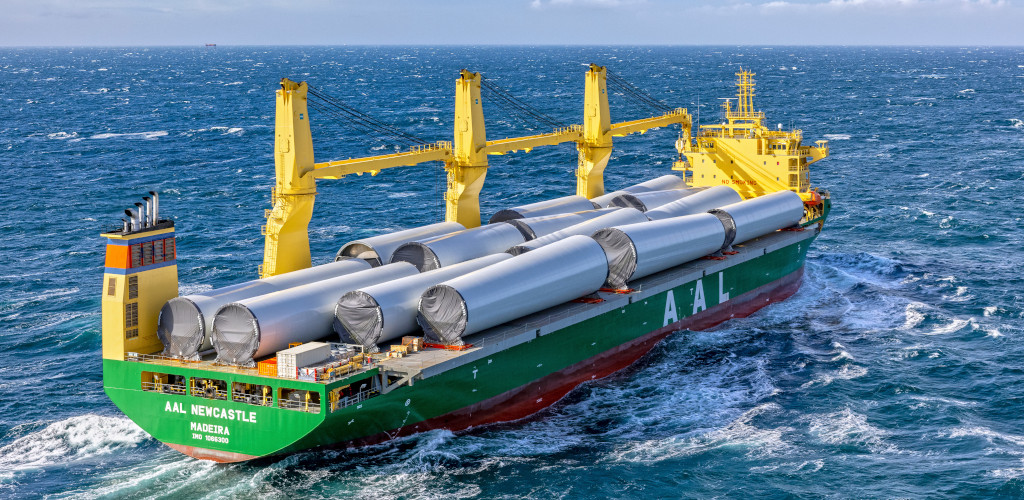
Top photo: AAL Shipping’s Super B-Class AAL Newcastle. Credit: AAL Shipping
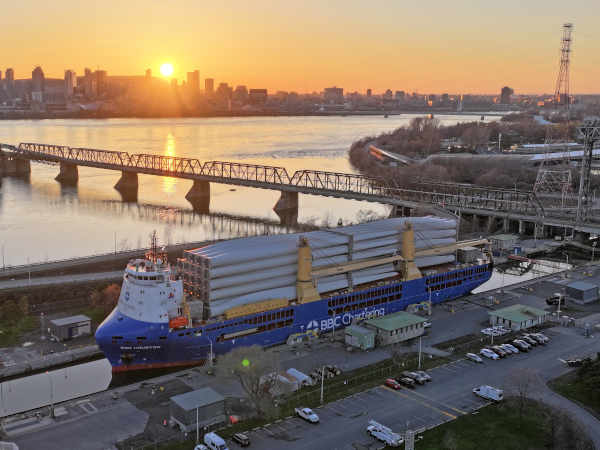
Second: BBC HOUSTON passes through St. Lambert Lock, Canada, with a shipload of windmill blades. Credit: BBC Chartering