
The Final Instalment of Ben Carrozzi's APAC Energy Review
In this three-part feature, Ben Carrozzi, partner at Norton Rose Fulbright, examines the energy choices facing governments across the region. In this third instalment, he explores the intersection of AI and data center demand with nuclear policy, and the case for greater regional collaboration through interconnected power grids and cross-border green molecule supply chains.
From Issue 4, 2026 of Breakbulk Magazine.
(3-minute read)

Beneath the immediate scramble to secure fuel and firm up supply chains, a demand-side force barely on the radar five years ago is reshaping the calculus for every government in the region: the explosive growth of power consumption from data centers and AI. This is adding urgency to a nuclear conversation that would have seemed implausible in Asia-Pacific up until very recently, and it is exposing just how far individual countries’ energy systems remain from the resilience that current events demand.
That exposure is, in turn, sharpening the case for a more collaborative regional approach. No single Asia-Pacific market, however well-resourced, can fully insulate itself from supply shocks acting alone. What follows examines how the nuclear conversation is evolving, and why cross-border power grids and green molecule supply chains may prove just as decisive to the region’s energy security as any single country’s domestic policy choices.
A Chain Reaction
In Southeast Asia alone, power demand from data centers is set to quadruple from 2.6 GW to 10.7 GW between 2025 and 2035, accounting for 3% to 4% of peak demand by 2035.
Data centers may become a force for accelerating the energy transition. Their operators have the capital, the long-term contracting appetite, and — in the case of global hyperscalers — the corporate sustainability mandates to anchor new renewable and nuclear capacity. They also risk overwhelming grids that are already under strain, and their growth adds urgency to the need for baseload zero-carbon technologies that can complement intermittent renewables.
Australia is considering a more interventionist response: Proposals released in August 2026 would require new data centers to support additional renewable generation, demonstrate sufficient contracted firming capacity and, potentially, register as large loads in the National Electricity Market. Related reforms seek to ensure that data centers bear the network-augmentation costs they cause or accelerate.
Emerging corporate procurement frameworks may offer part of the solution. Vietnam significantly expanded its Direct Power Purchase Agreement (DPPA) regime in June 2026, allowing qualifying consumers, including data centers, to procure renewable electricity through private-grid arrangements or national-grid structures involving financial settlement. Malaysia’s Corporate Renewable Energy Supply Scheme (CRESS) permits bilateral physical renewable-energy contracts through regulated open access. Thailand is moving in the same direction, but its DPPA framework remains under development, with key commercial matters such as wheeling charges, balancing and grid access still to be finalized.
In the near to medium term, however, this same demand growth may reinforce the role of gas. Data centers require firm, highly reliable power on development timelines that can be considerably shorter than those for nuclear deployment, major transmission expansion or emerging long-duration storage technologies. Unless clean firm capacity develops more rapidly, part of the immediate response may therefore be additional gas-fired generation, even as operators contract for renewable electricity.
In a twist that was virtually unimaginable a few years ago, regional attitudes toward nuclear energy are shifting markedly, with nuclear increasingly being considered as a potential source of firm, low-carbon power.
Singapore has moved beyond purely conceptual consideration of nuclear energy and is now building the institutional capability needed to make an informed decision. In May 2026, it announced that the International Atomic Energy Agency would conduct a Phase 1 Integrated Nuclear Infrastructure Review in 2027. That process is not a commitment to deploy nuclear power or small modular reactors (SMRs), but it marks a material step in Singapore’s nuclear-readiness program.
Similarly, Malaysia launched a fresh nuclear feasibility study in 2025 under its 13th Malaysia Plan. Meanwhile, India’s Nuclear Energy Mission targets 100 GW by 2047, while the SHANTI Act has opened a pathway for greater private-sector participation. Draft implementing rules released in August 2026 address operator liability, insurance and financial-security requirements, illustrating that the policy ambition is now moving into the more difficult phase of regulatory implementation.
In the U.S., hyperscalers are already co-locating with or restarting existing nuclear plants and signing PPAs with SMR developers. In fact, the scale of power demand from data centers challenges the very viability of SMRs — typically only 50 to 300 MW — as a solution for next-generation hyperscale campuses whose power requirements are being measured in gigawatts. The current geopolitical environment strengthens the energy security case for low-carbon baseload power that is less directly exposed to internationally traded fossil-fuel disruption, but the barriers remain formidable: advanced SMR designs are largely still under development, lead times are measured in decades, and capital requirements are immense.
The Case for Greater Regional Collaboration
 The current geopolitical environment has underscored a fundamental truth about energy security in a region as geographically dispersed and economically diverse as Asia-Pacific: no country can solve this alone. The ASEAN Power Grid — a long-discussed initiative to connect the electricity systems of the 11 ASEAN member states — could receive a significant policy boost from current events.
The rationale is simple: a country experiencing gas supply disruption could draw on surplus hydropower from Laos or Cambodia, or geothermal or renewable baseload from Indonesia or the Philippines, if interconnected transmission infrastructure existed. Laos already exports significant volumes of hydropower to Thailand and Vietnam, and Cambodia’s Mekong basin resources represent further untapped cross-border supply potential. Scaling these bilateral arrangements into a genuinely multilateral grid — one capable of balancing intermittent renewables across time zones and weather systems — would materially strengthen the region’s collective energy resilience.
But the case for regional collaboration extends well beyond interconnected power grids. Green molecule supply chains — hydrogen, ammonia, methanol and their derivatives — will inevitably transcend national borders. India’s National Green Hydrogen Mission targets 5 million tonnes of annual production by 2030, with significant export-oriented ammonia capacity planned at coastal sites including Kandla, Paradip and Tuticorin — designed to serve demand centers in Japan, South Korea, Singapore and Europe. CCS value chains, as discussed above, require cross-border coordination at every level. The realization of these decarbonization initiatives will require significant coordination at a policy, regulatory and infrastructure level.
Lasting Shift or Temporary Response?
Developments during 2026 have reinforced the need for Asia-Pacific governments to pursue energy security, affordability and decarbonization together; however, they have not yet produced a uniform regional policy reset. Instead, countries are pursuing different combinations of domestic renewables and storage, diversified gas supply, nuclear readiness, regional interconnection and, in resource-rich markets, continued reliance on indigenous fossil fuels to weather the effects of the shocks experienced by global energy markets.
History counsels against assuming that the present momentum will endure. The energy shock following Russia’s invasion of Ukraine generated similar urgency, only for parts of the policy response to weaken as markets adjusted. Many of the impediments to structural change remain: fiscal constraints, regulatory inertia, underdeveloped grids and ports, uncertain offtake structures, fragmented regional markets, and the difficulty of mobilizing long-term capital for complex infrastructure.
The emerging dividing line is therefore not simply between conventional and clean energy. It is between short-term measures that manage the immediate shock and durable frameworks capable of delivering investable projects and securing a sustainable, long-term energy future. Across LNG-to-power, offshore wind, hydrogen, biofuels, CCS and nuclear, ambition alone is insufficient. Bankable offtake, credible risk allocation, coordinated infrastructure, workable permitting and appropriate public support will determine which policies translate into operating assets.
If governments can address the underlying vulnerabilities, the crisis may yet herald the dawn of a more resilient, affordable and progressively lower-carbon regional energy system.
Read more in the series:
Part 1: Coal, Gas and the Gravitational Pull of the Status Quo
Part 2: Renewables and Green Molecules: The Harder, Longer Bet
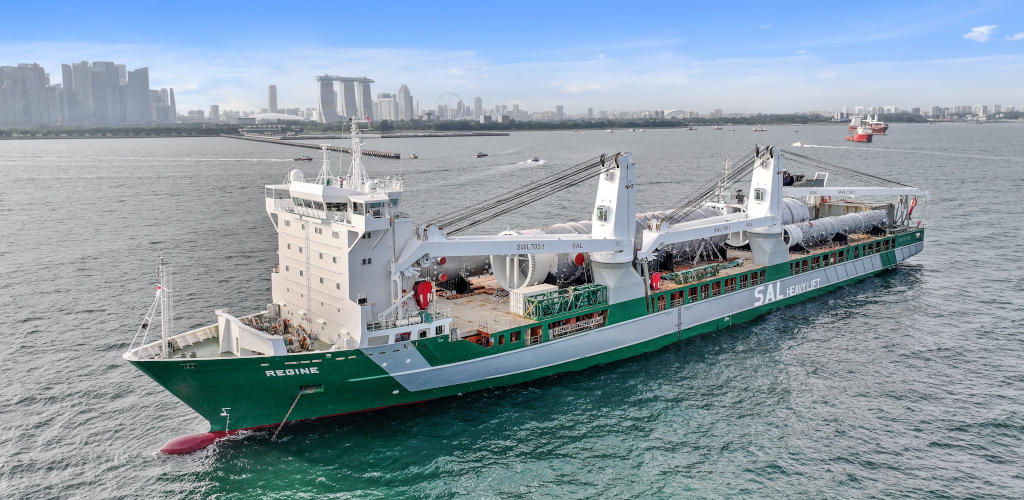
Top photo: SAL’s MV Regine carries project cargo in Singapore. Credit: SAL
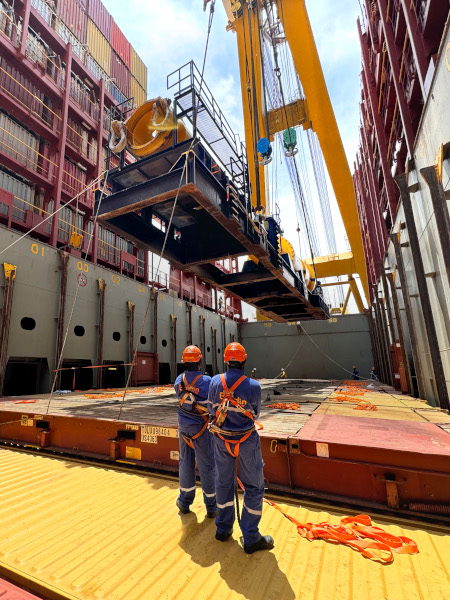
Second: MSC transports 390-tonne hydraulic hammer from Rotterdam to Singapore. Credit: MSC