Renewables and Green Molecules: The Harder, Longer Bet
In this three-part feature, Ben Carrozzi, partner at Norton Rose Fulbright, examines the energy choices facing governments across the region. In this second instalment, Carrozzi assesses the “harder, longer bets,” from conventional renewables and green hydrogen to sustainable aviation fuel, biofuels and carbon capture.
From Issue 4, 2026 of Breakbulk Magazine.
(3-minute read)

The disruption to Middle East supply routes has forced Asia-Pacific governments to confront a familiar question with new urgency: Does energy security mean falling back on the fuels the region already knows, or does it mean accelerating investment in the cleaner technologies it has long found difficult to scale?
For resource-poor, import-dependent markets in particular, the crisis has sharpened the appeal of the second path, even where the economics remain unproven and the timelines uncomfortably long.
Two categories of technology sit at the center of this harder bet: conventional renewables, which are commercially mature but constrained by intermittency and grid readiness; and green molecules (hydrogen, ammonia, biofuels — including sustainable aviation fuel — and carbon capture), which promise deeper decarbonization but have struggled to definitively clear the bankability threshold.
Conventional Renewables: Emboldened or Exposed?
The Philippines has taken a distinctively greener approach, doubling down on its bold ambition of a renewables-led clean energy future. Its Green Energy Auction Program (GEAP) targets at least 25 GW of new renewable capacity by 2035, with the sixth to ninth rounds targeting over 3,200 megawatts (MW) of solar and 5,565 MW from other technologies.
GEA-5, the country’s first dedicated offshore-wind auction, targets 3,300 MW of fixed-bottom capacity. However, the auction was suspended in July 2026 while the government recalibrates its approach to port and grid readiness, permitting, environmental requirements and implementation risk. An indicative auction date of Dec. 1, 2026, has been announced, subject to completion of the recalibration process and revised auction documentation.
The episode illustrates both the strength of the energy-security case for indigenous renewables and the challenges of translating ambitious targets into financeable projects.
India is demonstrating how to address this challenge directly. Its renewables program has introduced demand-driven Firm and Dispatchable Renewable Energy (FDRE) tenders, combining solar, wind and battery storage to deliver guaranteed round-the-clock power at tariffs that are competitive and declining. In September 2025, India signed its first “load-following” renewable power purchase agreement (PPA), requiring 80% fulfillment of hourly demand profiles using hybrid technology, a landmark for a market that only a few years ago treated renewables as inherently intermittent.
If recent developments sharpen the imperative for energy-intensive industries and data center operators to secure firm, clean power, India’s emerging contracting architecture may provide a useful template for other APAC markets.
In Northeast Asia, the picture is more complex. Throughout this period of elevated geopolitical risk, South Korea, Japan and Taiwan have been acutely exposed to elevated gas prices. South Korea’s President Lee Jae-myung has called the situation an “opportunity to swiftly and extensively transition to renewable energy.”
Japan, by contrast, appears to be pursuing a different policy mix: restricting mega-solar projects and accelerating nuclear restarts, while expanding its role as an LNG trader. Japanese electricity futures have spiked since the onset of the conflict, and the country’s excess LNG contracts, while providing short-term insulation, risk locking in long-term fossil fuel dependence. Taiwan fell materially short of its previous target for renewables to supply 20% of electricity by 2025, while its wind and solar program continues to face cost and delivery challenges.
The energy security rationale for offshore wind has never been stronger, particularly for countries such as South Korea, Japan and Taiwan that lack meaningful domestic hydrocarbon reserves but have extensive coastlines. Yet the complexity of development, enduring supply chain constraints and escalating development and finance costs are complicating the picture.
Green Molecules, Green Fuels and CCS
 Green hydrogen, green ammonia and CCS have occupied an awkward space in APAC energy policy for the better part of a decade: universally acknowledged as essential for deep decarbonization, yet persistently unable to clear the commercialization hurdles that would make them bankable and deliverable at scale.
BloombergNEF projects the levelized cost of green hydrogen to fall by 85% globally by 2050, but achieving those reductions depends on electrolyzer deployment and infrastructure buildout at a significantly higher pace than has so far materialized.
Sustainable aviation fuel (SAF) represents another frontier for green molecules across the region, although policy support remains a patchwork of mandates, targets, levies and voluntary arrangements. Singapore has established an initial 1% SAF target supported by a passenger-levy model, while Japan is pursuing a 10% SAF share by 2030. South Korea and Indonesia are moving toward initial requirements from 2027, while Thailand has introduced a voluntary 2026 pathway, and Malaysia is developing a longer-term roadmap. Neste’s expanded Singapore refinery is producing SAF at commercial scale, while Australia has announced an A$1.1 billion Cleaner Fuels Program to support domestic low-carbon liquid-fuel production.
Biofuels are also assuming a broader energy-security role beyond aviation. Indonesia launched its B50 program in July 2026, increasing the mandatory palm-based biodiesel blend from 40% to 50% in an effort to reduce imported diesel consumption and strengthen domestic demand for palm oil. The program is expected to require approximately 16.7 to 18 billion liters of fatty acid methyl ester, although its durability will depend on feedstock availability, the cost differential between palm oil and petroleum diesel, and the fiscal sustainability of the subsidy mechanism.
Marine biofuels present a related regional opportunity. Singapore, the world’s largest bunkering hub, permits blends up to B100 subject to applicable fuel-quality and sustainability standards, while recent transactions involving B25, B30, B100 and co-processed marine fuels point to an emerging Malaysia-Singapore value chain linking regional feedstock, storage, blending and bunkering infrastructure. Unlike aviation, however, shipping does not yet have a single global blending mandate, so demand remains driven by a combination of commercial commitments, regional regulation and anticipated international measures.
CCS faces comparable commercialization challenges, but an APAC-wide value chain is beginning to emerge. Critically, this is not a single-country proposition: the emerging model involves carbon capture at industrial facilities in emissions-intensive jurisdictions — think Vietnam, South Korea, Japan, Singapore — with compressed CO2 shipped for permanent sequestration in geological storage hubs in depleted reservoirs offshore Malaysia, Australia, Thailand or Indonesia. This cross-border architecture requires harmonized regulatory frameworks, bilateral agreements on liability and long-term stewardship, and shared transport infrastructure.
The current geopolitical environment could change the calculus in two ways. First, by making the energy security argument for domestically produced fuels and feedstocks more compelling to policymakers than abstract decarbonization commitments that alone have failed to catalyze meaningful investment to date. Second, by driving a reassessment of whether continued dependence on LNG — even at contracted prices — represents an acceptable long-term risk. The disruption strengthens the strategic case for green molecules and CCS, but it has not removed the need for bankable long-term offtake, infrastructure coordination and public policy support.
Whether that translates into bankable projects, however, depends on whether governments can match their stated targets with the fiscal and regulatory frameworks needed to derisk private investment.
Read more in the series:
Coal, Gas and the Gravitational Pull of the Status Quo
AI, Nuclear and the Case for Regional Collaboration
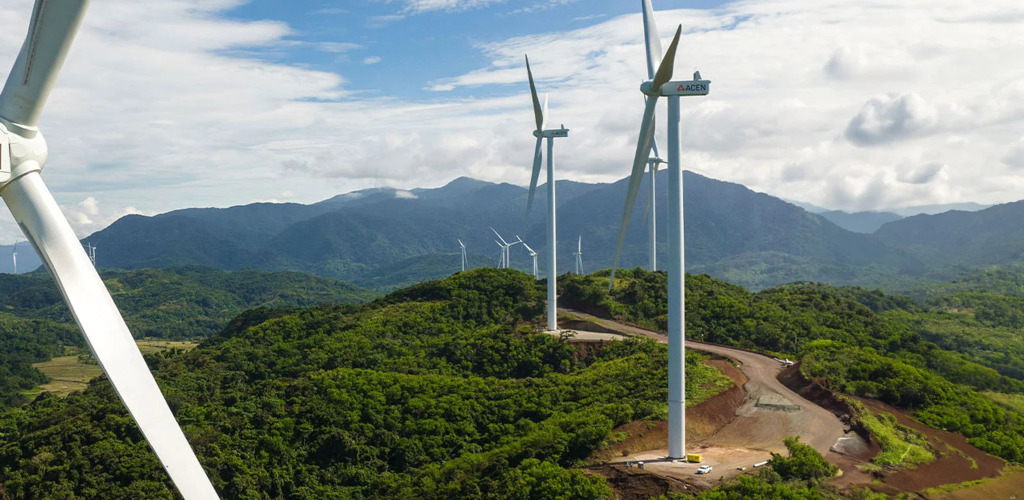
Top photo: The 70-MW Capa Wind project in Ilocos Norte, Philippines. Credit: ACEN
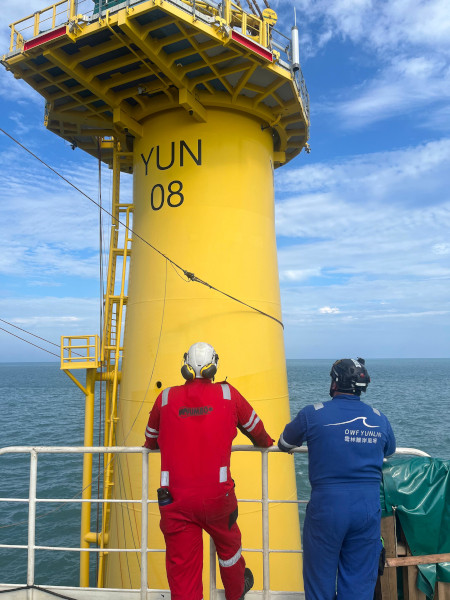
Second: Jumbo Offshore transports TPs for Taiwan's Yunlin offshore windfarm. Credit: Jumbo Offshore